

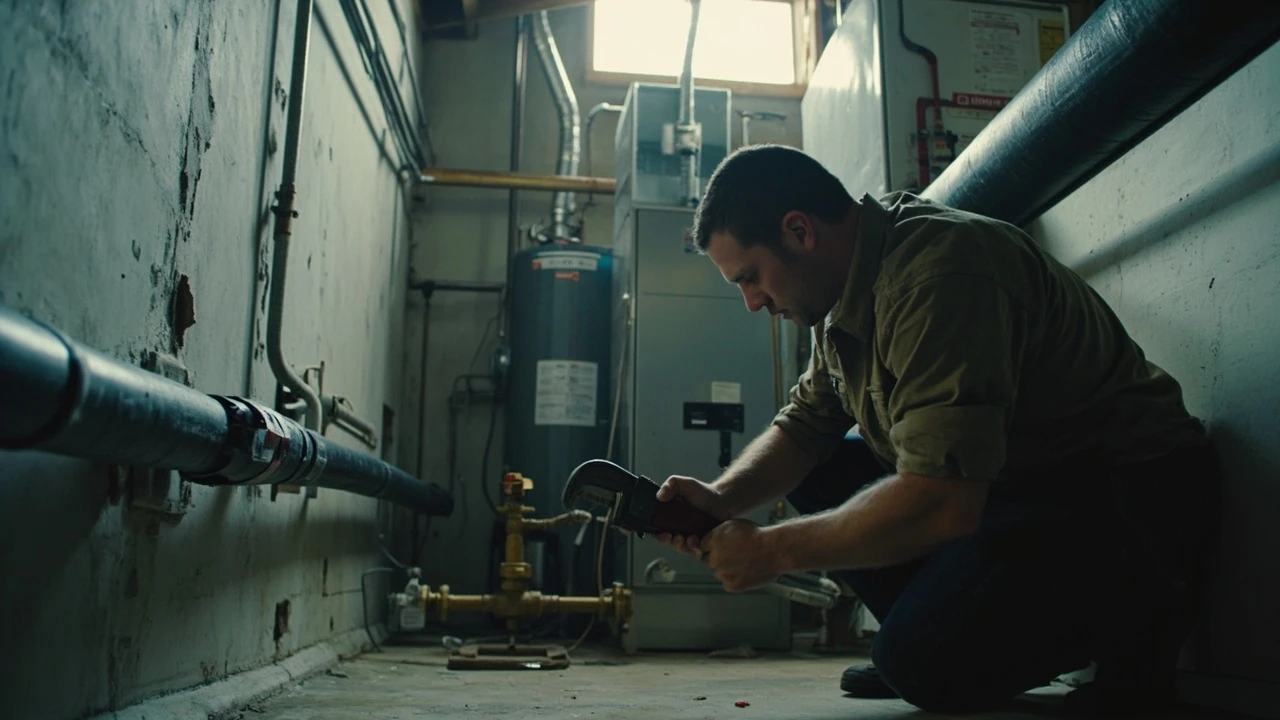
Gas line installation: the homeowner’s planning checklist
Before ordering a gas appliance, ask a qualified contractor and the gas supplier whether the property can support it. The work may involve an existing appliance connection, new interior piping, an underground run or a utility service upgrade. Those are different scopes, even if every estimate says “gas line installation.”
This guide covers the decisions and records a homeowner should discuss. It is not a procedure for assembling, pressure-testing or putting gas piping into service.
If you smell gas, leave before investigating
If you suspect a gas leak, leave the area immediately. Do not use flames, light switches, electrical equipment or a phone in the suspected leak area. From a safe location well away, contact the gas utility or emergency services and follow their instructions. Do not return until responders say it is safe.
PHMSA’s emergency-response guidance explains these ignition hazards. Do not try to find the leaking joint, test it with a flame or repair it while remaining inside. A smell that seems faint is not a reason to postpone reporting it.
Define the project before comparing quotes
Give the contractor the appliance make, model, fuel type and installation instructions. Adding a range is not necessarily equivalent to supplying a standby generator or tankless water heater. The proposed appliance and the existing connected equipment need to be considered together.
Natural gas and propane are not interchangeable fuels for an appliance without the appropriate manufacturer-approved provisions. Ask who is responsible for confirming compatibility and any authorized conversion. Do not assume that changing the pipe connection is all that is required.
The contractor should establish the route, capacity requirements and applicable code provisions. The gas supplier determines what utility-side changes or approvals are needed. Do not tamper with a utility meter or regulator to obtain more supply.
| Project information | Question to settle |
|---|---|
| Appliance and fuel | Is this exact model suitable for the intended fuel and location? |
| Existing service | Does the supplier need to assess the meter or service capacity? |
| Piping route | Which walls, floors or outdoor areas will the work affect? |
| Related work | Are venting, electrical, bonding or finish repairs included or separately contracted? |
| Approvals | Who obtains permits, arranges inspection and authorizes service restoration? |
Licensing, permits and local rules
Check with the authority responsible for the property’s location. A contractor’s trade license and the permit for a particular job are different things. An owner’s ability to apply for a permit does not establish the safety of a do-it-yourself installation.
For example, Seattle’s gas-pipe licensing information describes the local mechanic license. Separately, Pierce County’s permitting FAQ states that adding or changing gas piping requires a gas-piping permit there. These are Washington examples, not one permit rule or fee schedule for every U.S. jurisdiction.
Ask which adopted code and manufacturer instructions govern your project, what must remain available for inspection and who schedules the required visits. Do not let a general article’s test pressure, pipe diameter or inspection sequence substitute for the approved design.
Materials and bonding need a system-specific answer
A proposal may specify steel piping, a listed corrugated stainless steel tubing system or another material permitted for the intended use. Ask for the exact product and application rather than accepting “flexible gas pipe” as a complete description.
CSST is corrugated stainless steel tubing. Its fittings, protection and bonding provisions must be considered as part of the particular system. The manufacturer’s FlashShield protection and bonding information, for example, identifies product-specific components. It should not be read as an instruction to apply the same detail to every brand or jacket type.
A flexible appliance connector is also not automatically a replacement for a building’s branch piping. Have the responsible trade identify the approved arrangement. Do not disconnect, tighten or modify a fitting to check whether the quote was necessary.
Underground work: confirm locating responsibilities
Where excavation is involved, discuss the locate request before work starts. The required notice and response process depends on the state. Ask the excavator to confirm the ticket and the responses rather than assuming a visit from one locator clears every buried line.
Texas811’s FAQ distinguishes utility marking from private-line locating. Private facilities may need a separate locator. That can matter for a line serving an outdoor appliance or outbuilding, as well as for other buried services on the property.
Do not choose a trench depth or a digging method from a generic household diagram. The contractor must establish the applicable requirements, site conditions and protected route before excavation.
What the estimate and handover should cover
Request comparable written scopes. The total can change with access, route, appliance requirements, utility work, permits, inspections and restoration. An unsourced national price range cannot tell you what a particular property will cost.
- Identify the equipment, piping system and areas affected by the work.
- Specify who handles permits and utility coordination.
- Describe testing and inspection responsibilities without asking the homeowner to perform them.
- Separate wall, floor, landscaping and other restoration from the piping work where appropriate.
- Explain how additional work will be proposed and approved.
Before paying the final balance under your agreement, obtain the completion records that apply to the job: permit and inspection information, contractor details, equipment instructions and any agreed test documentation. Ask who can respond if an appliance does not operate as expected.
Only the responsible qualified personnel should perform the required testing, connections and commissioning. Do not turn gas back on or relight equipment yourself after a suspected leak or service interruption unless the responsible utility or qualified service professional has given the appropriate instructions.
A gas leak and carbon monoxide are different concerns
The CPSC’s carbon-monoxide guidance explains that CO is colorless and odorless and can result from incomplete combustion. An odor check cannot rule it out. CO alarms add protection but do not replace proper appliance use, maintenance or the response to a suspected fuel-gas leak.
Install and maintain alarms according to the manufacturer’s instructions and applicable local requirements. If a CO alarm sounds, move outside to fresh air and contact emergency services. Do not remain inside searching for the source or return until responders give permission.
Keep appliance ventilation and exhaust arrangements clear as instructed by the manufacturer. A completed pipe installation does not, by itself, establish that every appliance’s combustion and venting arrangements are correct.
Questions to ask before approving the job
Will the meter need an upgrade?
That requires an assessment of the existing service and proposed load with the gas supplier. Do not infer capacity from the meter’s appearance or an example in another home’s project.
Can I use a standard test pressure from the internet?
No. Testing conditions must be set for the applicable system and requirements by the responsible professional. Equipment can be damaged or made unsafe by an inappropriate test.
Is the cheapest quote necessarily missing work?
Not necessarily. Compare the stated scope, exclusions, qualifications and approval process. A price difference is a reason to ask questions, not proof of misconduct.
Does missing paperwork automatically void insurance?
Do not assume a coverage decision either way. Ask the insurer about the actual policy and circumstances, and retain the required project documentation.
Should I operate every shutoff valve annually?
Do not adopt a blanket valve-operation routine from a general article. Follow the responsible utility’s and equipment manufacturer’s instructions and leave gas-system servicing to qualified people.
For other project-planning topics, see Home Improvement. Those guides do not replace the site-specific design, approvals or commissioning of a gas system.

Leave a Reply