Epoxy lantai: what it is and how it works
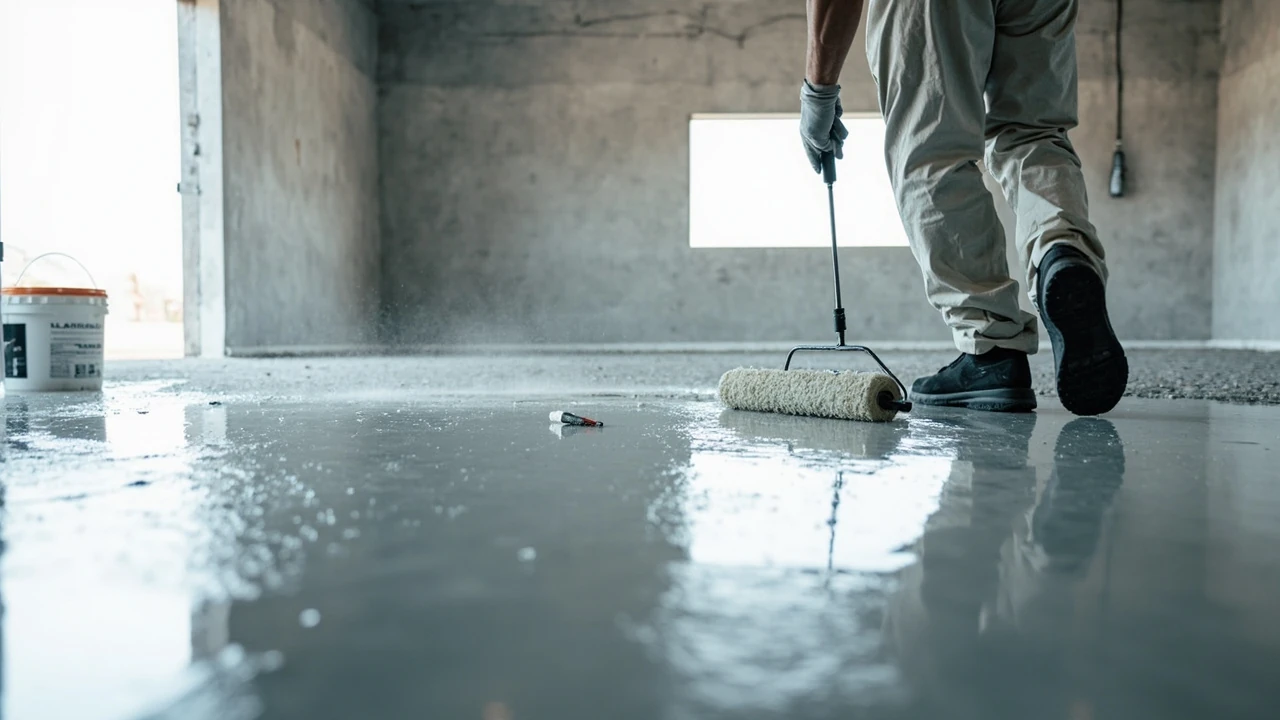
A two-part resin system quietly does most of the heavy lifting in a modern coated floor. When a liquid resin is mixed with a measured amount of hardener, a chemical reaction called curing begins, and the runny liquid slowly turns into a hard, glossy film bonded to the concrete underneath. That cured film is what people in many regions, especially across Southeast Asia, refer to as epoxy lantai, a term that simply means an epoxy floor or epoxy floor coating applied over a slab.
Homeowners and facility managers usually meet this material in a garage, a warehouse aisle, a kitchen, or a hospital corridor. The reasons for choosing it are practical: the cured film resists abrasion, shrugs off many spilled chemicals, seals dusty concrete, and gives a smooth, easy-to-clean surface. Understanding what the coating actually is, how it cures, and which type fits a given space is the difference between a floor that looks good for a decade and one that peels within a season.
This guide walks through the chemistry in plain language, the practical benefits, the main system types, the conditions that cause failure, and the decisions a property owner faces before hiring an installer. Where claims depend on formulation or site conditions, that is noted explicitly so the reader can tell editorial interpretation from established material behavior.
What epoxy lantai actually is
Epoxy lantai is a thermosetting floor coating made from two liquid components: a resin and a hardener, sometimes also called a curing agent. The resin side is typically a diglycidyl ether of bisphenol-A, often shortened to DGEBA, while the hardener is most commonly an amine or polyamide. When the two are combined in the ratio specified by the manufacturer, an exothermic reaction begins, cross-links form between the molecules, and the mixture transitions from a pourable liquid to a rigid solid.
Unlike a simple paint that dries by evaporation, an epoxy floor cures by chemical reaction. That difference is why a properly installed epoxy floor bonds so tightly to a prepared concrete substrate and why it behaves like a single continuous layer rather than a stack of weak films.
Most systems used in residential and light commercial work are 100 percent solids or high-solids formulations, which means there is very little solvent that evaporates during cure. Older, cheaper products with more solvent can lay down a thicker wet film but shrink more during cure, which sometimes leads to bubbles, pinholes, or weaker adhesion. Modern high-build systems avoid much of that shrinkage.
Why a slab needs preparation before epoxy lantai is applied
Concrete looks solid, but it is porous, often damp, and almost always contaminated at the surface. The most common cause of an epoxy floor failure is not the resin itself but poor preparation of the substrate.
A proper installation sequence usually includes the following steps. Each step is important, and skipping any one of them can shorten the life of the floor.
- Moisture testing: either a plastic sheet taped to the slab for 24 hours or a quantitative moisture meter to check that water vapor is not pushing up through the concrete.
- Mechanical profiling: diamond grinding or shot blasting to open the surface pores and remove laitance, the weak powdery layer that forms on top of new concrete.
- Crack and joint repair: routing out dynamic cracks and filling them with a flexible repair material so movement does not telegraph through the finish.
- Dust and contaminant removal: vacuuming and tack-clothing so oil, curing compounds, or dust do not sit between the slab and the primer.
- Priming: a thin penetrating layer that soaks into the concrete and gives the build coats a reliable surface to grip.
The accepted industry benchmark for surface profile is a concrete surface profile of CSP 3 to CSP 5, depending on the system. That number describes how rough the prepared slab should look, not how shiny the final floor will be. A glossy topcoat can only perform as well as the tooth it is bonded to.
How an epoxy lantai system is built up in layers
An epoxy floor is rarely a single coat. It is a layered system, and each layer has a specific job.
- Primer or seal coat soaks into the prepared concrete, seals the surface, and improves adhesion for the next layer.
- Body coat or build coat supplies most of the thickness that delivers wear and chemical resistance.
- Broadcast layer (optional) uses colored quartz, vinyl flakes, or aluminum oxide spread into the wet body coat to add texture, color, or slip resistance.
- Topcoat seals the broadcast, adds the final color or gloss, and provides UV, stain, and chemical resistance.
Total dry film thickness for a light residential garage typically falls between 8 and 12 mils, while a commercial kitchen or industrial aisle might be specified at 30 to 80 mils or more. Heavier traffic, chemical exposure, or forklift use generally calls for a thicker system, and the cost goes up with thickness.
Main types of epoxy lantai systems
There is no single epoxy floor. Manufacturers offer several families that are tuned for different substrates and service conditions. The table below summarizes the most common ones. The descriptions reflect the way the systems are usually described in manufacturer literature and by independent flooring associations, and the suggested uses are typical rather than universal rules.
| System type | Typical thickness | Key characteristics | Where it is commonly used |
|---|---|---|---|
| Self-leveling epoxy | 2 to 4 mm | Smooth, seamless, high gloss; flows out to a flat surface. | Showrooms, laboratories, hospitals, warehouses. |
| Mortar epoxy (troweled) | 4 to 8 mm | High-build, impact resistant, can rebuild damaged concrete. | Industrial plants, heavy-traffic aisles, repair of spalled slabs. |
| Self-dispersing epoxy with quartz | 3 to 6 mm | Quartz aggregate broadcast for slip and wear resistance. | Commercial kitchens, food processing, wet work areas. |
| Anti-static or conductive epoxy | 1.5 to 3 mm | Dissipates static charge; meets ESD or explosion-safety requirements. | Electronics assembly, server rooms, munitions facilities. |
| Flake or decorative epoxy | 2 to 4 mm | Vinyl flakes broadcast for color and light texture, sealed with clear topcoat. | Residential garages, basements, retail floors, gyms. |
| 3D or metallic epoxy | 2 to 4 mm | Pigments manipulated to create depth, swirl, or imagery under a clear topcoat. | Feature lobbies, themed interiors, boutique retail. |
| Water-based or thin-film epoxy | 3 to 10 mils | Lower build, easier to apply, often used as a primer or light sealer. | Light residential use, sealing new concrete, budget coatings. |
Each system can be combined with a different topcoat. Common topcoat chemistries include standard epoxy, polyurethane, and polyaspartic. Polyurethane and polyaspartic topcoats are often chosen over bare epoxy for the final layer because they hold color and gloss better under sunlight, while pure epoxy can yellow or chalk when exposed to UV over time.
Comparing epoxy lantai with other common floor finishes
Epoxy is one of several options a property owner might consider. The table below compares epoxy lantai with three alternatives that show up in similar conversations. Numbers reflect typical ranges, not site-specific quotes, and the best choice always depends on the slab, the traffic, and the budget.
| Attribute | Epoxy lantai | Polished concrete | Ceramic or porcelain tile | Vinyl sheet or luxury vinyl tile |
|---|---|---|---|---|
| Seamless surface | Yes, fully seamless. | Yes, with control joints. | No, grout lines. | Seams every few meters. |
| Typical installed cost (US, residential garage, 2024-2025 range) | Mid range, often higher than paint and lower than tile when comparing build quality. | Comparable mid range, depends on gloss level. | Often the highest installed cost of the four. | Often the lowest installed cost. |
| Slip resistance when wet | Adjustable with broadcast aggregate. | Adjustable with finish and aggregate. | Good when textured, slippery when highly polished. | Varies by product and wear layer. |
| Chemical and stain resistance | Good to excellent, depending on topcoat. | Good, but porous if not sealed. | Excellent against most household chemicals. | Moderate, seams can absorb spills. |
| Repair if damaged | Patchable with same system, color match is the challenge. | Re-polishing possible, deep gouges hard to hide. | Individual tiles can be replaced. | Planks can be replaced. |
| Typical service life with normal care | Often 8 to 15 years in residential use, shorter under heavy industrial traffic. | 10 to 20 years with periodic re-polishing. | 15 to 25 years, depending on substrate and quality. | 10 to 20 years for quality LVT, less for sheet vinyl. |
The point of the comparison is not to declare a winner. Each finish has a sweet spot. Epoxy lantai tends to win on seamless cleanliness and chemical resistance, polished concrete on lifecycle cost in large square-footage commercial buildings, tile on hot and wet residential kitchens, and vinyl on installed cost and acoustic comfort in apartments.
Where epoxy lantai makes sense
The coating is not a cure-all, and it performs best where its strengths line up with the demands of the space. Three categories cover most of its use.
- Residential garages and basements. A flake or solid-color system gives a bright, easy-to-clean floor that resists road salt, oil drips, and tire marks. The slab is usually in good shape, traffic is light, and the homeowner benefits from a finished look without grout lines.
- Light commercial and retail. Boutiques, salons, cafés, and small clinics often choose a self-leveling or metallic system because it presents a continuous, cleanable surface that supports branding through color or logo work embedded in the floor.
- Industrial and institutional. Warehouses, food and beverage plants, hospitals, and laboratories use mortar or quartz broadcast systems because they can be built up to the thickness needed for forklift traffic, hot washdowns, or chemical spills.
Outside these categories, other finishes often perform just as well or better. For example, exterior driveways usually do better with concrete or pavers, because UV exposure and freeze-thaw cycles punish most epoxies, even with a UV-resistant topcoat. Wood-look floors in living areas are still typically engineered wood, laminate, or luxury vinyl, where warmth and acoustic comfort matter more than chemical resistance.
Where epoxy lantai does not perform well
Honest expectations matter. The coating has clear weak points that a careful owner should know about up front.
- Outdoors without a UV-stable topcoat. Bare epoxy chalks and yellows in sunlight, and thermal movement in exterior slabs can break the bond. A UV-stable polyurethane or polyaspartic topcoat helps, but full sun still shortens service life compared to a covered slab.
- Wet slabs with rising moisture. If water vapor is pushing up through the concrete, it can delaminate even a well-installed system. A moisture-mitigation primer or a different floor system may be required.
- Soft or contaminated concrete. Paint, oil, curing compounds, or a weak top layer of concrete will cause the epoxy to lift with the weak material. Mechanical removal of the weak layer is the only reliable fix.
- Heavy rolling loads with sharp turns. Powered pallet jacks or forklifts that pivot in place can scour a thin residential system. Industrial sites need thicker mortar systems or hardened topcoats.
- Expectation of a perfectly invisible repair. Field repairs in a colored or metallic floor rarely match the original exactly. Owners who cannot tolerate visible patches may want a different floor or an agreed plan for future re-topcoating.
How long an epoxy lantai installation takes
Timing depends on slab condition, system choice, and weather. A typical residential two-car garage follows a rough sequence of one day for preparation and primer, one day for the body coat, one day for any broadcast and a clear topcoat, and then at least 24 to 72 hours before driving the car back in. Full chemical cure often takes a full week, so dragging heavy toolboxes or parking a car with hot tires on the surface before that point can mark the finish.
Larger commercial or industrial installations can take one to three weeks, especially when multiple build coats, broadcast layers, and a polyaspartic topcoat are scheduled around other trades. The cure window is usually the longest part of the schedule, not the labor.
What epoxy lantai can and cannot do for safety
A common reason people specify epoxy is safety, but the picture is more nuanced than the marketing. The coating itself does not add slip resistance unless a texture is built in. A mirror-smooth, high-gloss finish can be more slippery than bare concrete, especially when wet.
Improving traction usually means broadcasting aluminum oxide, silicon carbide, or coated quartz into a wet coat so the surface has micro-roughness. A broadcast system can be tuned for the expected level of wet or oily traffic, and most manufacturers publish coefficient of friction targets. A practical check for the owner is to walk the reference floors the installer has done and to ask what the measured slip rating is on the system being proposed.
For chemical safety, the picture is also conditional. Standard amine-cured epoxies resist many fuels, oils, and household chemicals but are vulnerable to strong acids, some solvents, and prolonged exposure to hot water. Sites that expect those exposures should specify a topcoat chemistry that the manufacturer has tested against the exact chemical and concentration, and they should look at the test method, not just a brochure claim.
Maintenance that actually extends service life
Epoxy floors are low-maintenance, but they are not no-maintenance. A few habits keep the finish looking new for longer.
- Sweep or dust-mop regularly. Grit under shoes or wheels is the main cause of fine scratches that dull the gloss.
- Clean spills quickly. Even a chemical-resistant system will mark under a spill that sits for days, especially with strong dyes or solvents.
- Use neutral pH cleaners. Citrus or acidic cleaners can dull gloss over time and may attack certain topcoats. Manufacturer data sheets usually list approved cleaners.
- Place walk-off mats at entries. Most of the dirt on a coated floor comes in on shoes. Mats keep that grit off the finish.
- Re-topcoat before the body coat wears through. A clear topcoat can usually be re-applied over a sound epoxy system. Refreshing that sacrificial layer is cheaper than grinding back to concrete and starting over.
- Use soft pads under heavy equipment. Gym equipment, tool cabinets, and workbenches can dent or scratch even a thick system without pads.
Cost drivers a property owner should understand
Two floors quoted at the same square footage can have very different prices, and the difference usually comes down to a few variables.
- Surface preparation. Grinding a sound slab is cheaper than shot blasting a heavily contaminated or very uneven one. The more aggressive the profile, the higher the labor cost.
- Moisture mitigation. If the slab needs a moisture-tolerant primer or a vapor barrier, the material cost climbs.
- System thickness. A 60 mil industrial build uses far more material than an 8 mil residential coating. Material cost scales with thickness.
- Topcoat chemistry. A polyaspartic topcoat is faster to cure and more UV stable than a standard polyurethane, but it costs more per square foot.
- Decorative options. Metallic pigments, custom colors, embedded logos, and 3D graphics are attractive but add both material and labor hours.
- Access and scheduling. Tight access, occupied spaces, and night or weekend work all raise the cost compared to an empty daytime site.
For a residential two-car garage in many US markets, a mid-range professionally installed flake or solid-color epoxy system often lands in the low to mid four figures, while a high-end metallic or 3D system in the same footprint can be several times that. Commercial and industrial numbers vary widely with thickness and specification, which is why project-specific quotes matter more than any national average.
Decisions to make before hiring an installer
Walking into a quote conversation with clear answers keeps the project on track and the budget under control.
- What is the floor expected to handle? Foot traffic, vehicle traffic, hot tires, chemicals, rolling loads, or a combination. The answer drives system choice and thickness.
- How is the slab today? New or existing, level or cracked, dry or showing moisture, sealed or never sealed. A small slab survey up front prevents surprise change orders.
- What is the look? Solid color, flake, metallic, or quartz. Each has a different price point and a different skill requirement for the installer.
- What is the downtime tolerance? A shop that needs to reopen in 24 hours needs a fast-cure system, which costs more. A garage that can sit empty for a week has more flexibility.
- What warranty is realistic? A clear written warranty on materials and labor, with the conditions spelled out, is more useful than a verbal promise of a lifetime floor.
For homeowners comparing options across remodeling projects, it can help to look at how an epoxy floor fits alongside other upgrades, from a window glass replacement that brings in more daylight to a roofing material decision that affects the whole envelope of the house.
Common installation mistakes and how to avoid them
Most failed floors share a small set of root causes. Knowing them up front helps an owner spot trouble before the resin is mixed.
- Skipping the moisture test. A slab that looked dry for years can still push enough vapor to blister an epoxy system. Insist on a test before signing a contract.
- Coating over a curing compound or sealer. The finish will sit on top of that weak layer, not on the concrete. A simple water drop test that beads on the surface is a warning sign.
- Mixing in the wrong ratio. Epoxy is not paint. Off-ratio mixing is one of the most common reasons a coat never fully cures and stays soft or sticky.
- Ignoring pot life. Once the resin and hardener are mixed, the clock is running. Using material past its pot life is one of the most expensive shortcuts.
- Applying outside the temperature window. Most systems specify a substrate temperature range, often 55 to 85 degrees Fahrenheit. Outside that range, the cure changes and the result suffers.
- Forgetting about joints. Control joints and saw cuts should be honored. Filling them rigidly often leads to cracking at the joint line as the slab moves.
Independent industry guidance on floor preparation and coating selection is published by bodies such as the Justus guide to epoxy lantai systems, which walks through the main resin, hardener, and flooring types in detail for readers who want a manufacturer-side perspective alongside this general overview.
Health, odor, and indoor air considerations
Freshly applied epoxy can have a noticeable odor, and people with asthma or chemical sensitivities should plan for it. The smell comes mostly from the amine hardener and any solvent in the formulation, and it usually fades over a few days as the system cures.
100 percent solids and water-based systems produce far less odor than high-solvent products. Ventilation during installation and the first 24 to 48 hours of cure is the simplest mitigation. Some manufacturers offer low-odor or “green” formulations that meet specific indoor air quality programs, and owners with strict air quality requirements should ask for documentation of the relevant third-party certification rather than rely on a verbal claim.
Once fully cured, an epoxy floor is generally considered inert and does not off-gas in service. The cleaner used for routine maintenance has a bigger ongoing effect on indoor air than the cured floor itself.
Repair, re-topcoating, and end of life
Even a well-installed floor eventually shows wear. The good news is that most repairs are local, and a planned re-topcoat can reset the clock.
- Spot repairs. Small chips, gouges, or chemical stains can be ground out and patched with the same system. Color match is the hard part, especially with metallic or custom colors, so keeping a small jar of the original mixed material and color record helps.
- Re-topcoating. When the clear topcoat wears through but the body coat is still sound, a fresh abrasion and a new topcoat can restore gloss and slip resistance at a fraction of the cost of a full replacement.
- Full replacement. At the end of the floor’s life, the coating can be ground off and a new system applied, provided the slab is still structurally sound. Removal is dusty work and is usually done by the same kind of contractor that installs the floor.
For homeowners weighing whether to repair or replace, it can be useful to look at the broader project, since a floor that is being replaced during a larger renovation may justify a higher-spec system than one that is being patched in isolation. Articles such as a water main repair overview for the property can sit in the same planning folder as a floor replacement, because both touch the building envelope and infrastructure rather than the finishes alone.
Frequently asked questions
How long does epoxy lantai last in a home garage?
A professionally installed residential system on a sound slab typically lasts 8 to 15 years with routine care. Lifespan shortens with hot-tire exposure, chemical spills left to sit, and UV through an open garage door, and lengthens when the floor is cleaned regularly and re-topcoated before wear reaches the body coat.
Can epoxy lantai be installed over old paint or tile?
It can be installed over some existing surfaces, but the result is only as good as what is underneath. Paint often peels, tile can release, and both can telegraph grout lines or patterns. Most professional installers prefer to grind back to bare concrete for a reliable bond, especially on floors that will see vehicle traffic.
Is epoxy lantai slippery when wet?
A high-gloss, smooth epoxy floor can be more slippery than bare concrete when wet. Slip resistance is built in by broadcasting aluminum oxide, quartz, or vinyl flakes into the surface. A floor specified and installed with the right texture for its use can meet common safety targets for wet and oily conditions.
What is the difference between epoxy and polyurethane floor coatings?
Epoxy is a two-part resin that cures into a hard, chemically resistant film and is usually the body of the system. Polyurethane is often used as a topcoat because it holds color and gloss better under UV and abrasion. Many floors combine both, with epoxy as the build layer and polyurethane as the protective skin.
How long before the floor can be used after installation?
Light foot traffic is often possible within 24 hours, full use within 48 to 72 hours, and vehicle traffic usually after 5 to 7 days, depending on the system and the temperature. Fast-cure polyaspartic systems can shorten these windows, but they also cost more per square foot.
Does epoxy lantai yellow or change color over time?
Plain epoxy can yellow or chalk when exposed to UV, especially in clear or light colors. Adding a UV-stable polyurethane or polyaspartic topcoat dramatically slows that effect. For outdoor or sun-drenched spaces, an aliphatic topcoat is the standard way to keep color true.
Can epoxy lantai be applied in cold or damp weather?
Most systems have a defined temperature and humidity window, often with a substrate temperature above 55 degrees Fahrenheit and a relative humidity below a specified limit. Outside that window, the cure changes, the surface can blush or amine-sweat, and adhesion can suffer. Heated enclosures or cold-weather formulations extend the working season but add cost.
Is an epoxy floor a good choice for a basement?
It can be, provided the slab is dry or can be made dry. A moisture test is the first step, because water vapor pushing up through a basement slab is one of the most common causes of failure. With a moisture-tolerant primer or mitigation system in place, an epoxy floor gives a bright, seamless, easy-to-clean surface that many basements benefit from.
What should be in a written quote for an epoxy lantai job?
A clear quote should name the manufacturer and product line, the system thickness in mils or millimeters, the surface preparation method, the number of coats, the topcoat chemistry, the warranty terms, the cure window, and what is excluded, such as slab repairs, joint filling, or furniture moving. Vague language such as “epoxy floor, two coats” is a signal to ask for more detail.
Can small DIY epoxy kits give the same result as a professional job?
DIY kits can produce acceptable results in low-demand spaces such as a storage room, and they are a reasonable way to learn the chemistry on a small footprint. For a vehicle bay, a finished basement, or a commercial floor, a professional installation usually pays for itself in surface preparation equipment, moisture testing, and the experience to handle the slab’s specific quirks.

Leave a Reply