

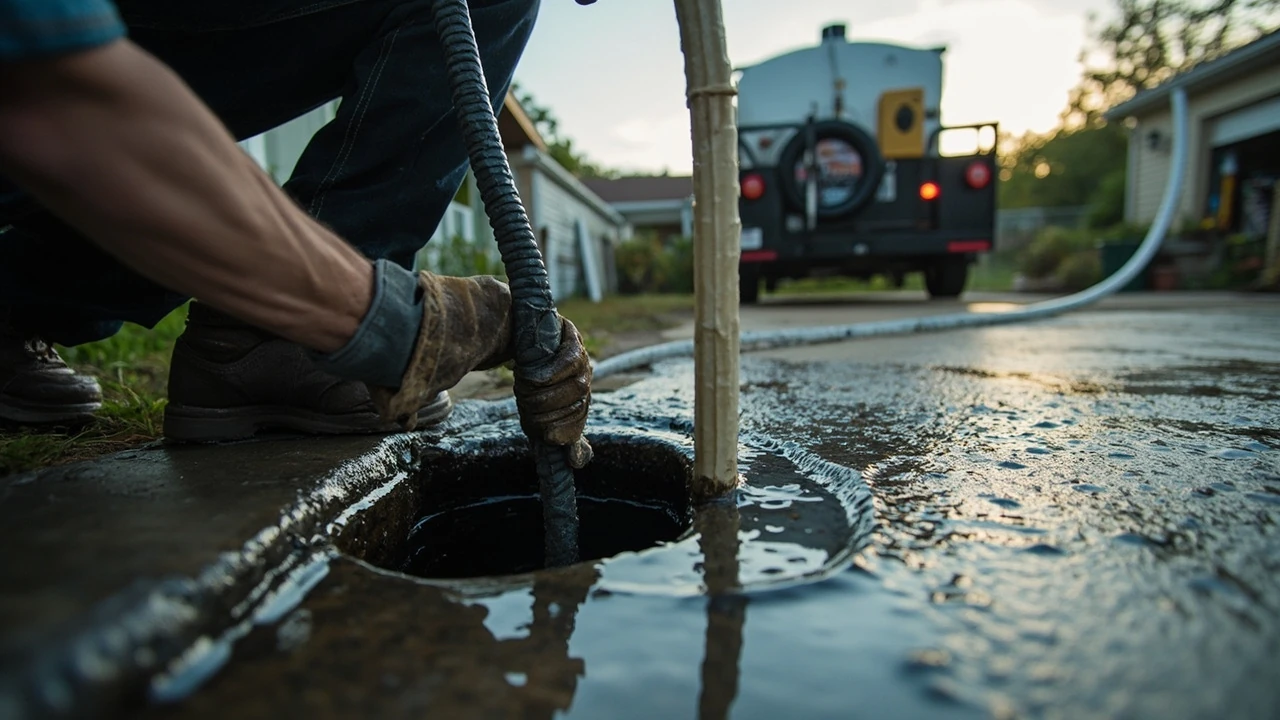
Hydrojetting: what it is and when it makes sense for a stubborn drain
A slow kitchen sink that gurgles every time the washing machine drains is rarely just a surface-level annoyance. In many U.S. homes, that sound is the first hint that grease, soap residue, and small debris have built a partial dam somewhere in the main sewer line. When a plunger or a basic cable snake no longer restores full flow, homeowners start searching for a more thorough fix, and that search usually leads to one term: hydrojetting.
Hydrojetting is a professional drain-cleaning method that uses water pressurized through a specialized nozzle to break apart clogs and scour the inside walls of a sewer line. It is not the same as snaking, and it is not something most homeowners should attempt with rental equipment. The rest of this guide explains how the process actually works, what problems it solves, where it can hurt rather than help, and how to decide whether a service call is the right next step.
How hydrojetting actually works
The mechanics of hydrojetting are straightforward, but the equipment and the technique matter. A plumber brings a jetter unit that combines a large water tank, a high-pressure pump, a heavy-duty hose, and a nozzle designed to direct water in specific patterns. The hose is inserted into the sewer line, usually through a cleanout, and the nozzle is pushed by the recoil of the water itself.
Most residential jetters operate in the range of roughly 1,500 to 4,000 PSI, with flow rates typically between 4 and 18 gallons per minute. Those numbers are general operating ranges used across the industry; the exact settings a technician chooses depend on pipe diameter, pipe material, and the type of blockage. Higher pressure is not automatically better. Too much pressure in a fragile line can do more harm than the clog ever would.
The nozzle is the part that does the real work. Forward-facing jets blast water straight ahead to break through the obstruction, while rear-facing jets pull the hose forward and scour the pipe wall as the nozzle moves. As the technician slowly retracts the hose, the rear jets peel buildup off the interior of the pipe, leaving a cleaner surface than the line probably had in years.
Hydrojetting is not a single one-size-fits-all blast. A skilled technician will choose a nozzle based on the situation:
- A penetrating or ice nozzle for hard, dense obstructions such as tree roots or compacted scale.
- A standard sewer nozzle for general grease, soap, and paper blockages.
- A spinning or rotating nozzle when the goal is more surface cleaning than penetration.
- A chain flail or descaling nozzle for hard scale inside cast iron, used with extra care to avoid damaging the pipe wall.
Water pressure alone does not clean a line well. Gallons per minute matter just as much as PSI, because flow is what carries the dislodged debris out of the pipe. A high-PSI, low-flow setup might punch a hole through a clog while leaving most of the buildup behind. A balanced jetter clears the line and flushes the debris toward the city main.
Common causes of buildup that hydrojetting solves
Sewer lines do not usually clog overnight. They accumulate material over months or years until the remaining opening is too small to handle normal household flow. Several patterns show up again and again in residential service calls.
Grease is the single most common cause of repeated kitchen and main-line clogs. Warm grease flows down the drain as a liquid, then cools and solidifies on the pipe wall. Over time it forms a sticky layer that catches coffee grounds, food particles, and other debris. Hydrojetting cuts through that layer and washes the residue out of the line.
Soap scum and hair combine in bathroom lines, especially in older homes with cast iron or galvanized steel piping. The interior of these pipes is rougher than PVC, so buildup clings more easily. Hydrojetting restores a smoother interior surface and reduces the chance of an immediate re-clog.
Tree roots are a different problem. Fine roots find their way into sewer lines through small joints or hairline cracks, then grow into a dense mat that catches toilet paper and waste. Hydrojetting can cut and flush smaller root intrusions, but it does not repair the entry point. If roots are present, a follow-up plan is usually needed.
Non-flushable wipes are a frequent culprit even when the packaging says “flushable.” These products do not break down the way toilet paper does and tend to snag on any rough spot inside the pipe. Once one wipe catches, more pile up behind it. A jetter can break that mass apart and clear the line in a single visit.
Mineral scale builds up slowly in areas with hard water, narrowing the effective diameter of the pipe. In severe cases, the pipe can lose a significant share of its original cross-section. Hydrojetting, often with a descaling nozzle, can remove soft scale and improve flow, though it cannot reverse structural damage.
Hydrojetting vs. snaking vs. chemical drain cleaners
Homeowners usually encounter three options when a drain stops cooperating: a plumber’s snake (also called a cable or auger), a hydrojetting service, or an off-the-shelf chemical drain cleaner. They are not interchangeable, and choosing the wrong one can waste money or damage plumbing.
| Method | Best for | How it works | Limitations |
|---|---|---|---|
| Cable snake or auger | Single, localized clogs close to a fixture | A flexible cable is rotated into the line to break through or hook the obstruction | Punches a hole through the clog rather than cleaning the pipe wall; residue remains and can re-clog |
| Hydrojetting | Recurring or widespread buildup in the main sewer line | High-pressure water scours the full interior of the pipe and flushes debris out | Requires professional equipment; not appropriate for damaged or fragile pipes |
| Chemical drain cleaners | Minor, slow drains in a single fixture | Caustic or acidic reactions dissolve organic material | Can damage older metal pipes, harm septic systems, and rarely reach the main line |
| Enzymatic or bacterial cleaners | Slow maintenance of drain lines and septic systems | Biological activity breaks down organic matter over time | Too slow for active clogs; works best as a monthly maintenance habit |
Snaking is usually the right first call for a single clogged toilet or a backed-up bathroom sink, where the clog is close to the fixture. Hydrojetting becomes the better answer when the same line keeps clogging, when multiple fixtures back up at once, or when a camera inspection shows buildup along a long stretch of pipe. Chemical cleaners have a narrow role; using them repeatedly in an older home can shorten the life of the piping.
Signs that point to a main-line problem
It is tempting to treat every drain issue as a localized clog, but a few patterns are strong signals that the real problem sits in the main sewer line rather than in a single trap or fixture.
- Multiple fixtures drain slowly at the same time, especially a tub and a toilet on the same floor.
- Water backs up into a shower or tub when a washing machine drains.
- Toilets gurgle or bubble when other fixtures are used.
- Foul sewer odors come from more than one drain, or from the yard near the cleanout.
- Water pools around the floor drain in a basement or laundry room.
- A previous clog cleared quickly but returned within weeks.
When two or more of these signs show up together, the main line is the most likely location. A professional can confirm with a camera inspection before any cleaning work begins, which protects the homeowner from paying to clear a line that is actually broken or collapsed.
The hydrojetting process, step by step
A hydrojetting service call is more methodical than most homeowners expect. A reputable plumber follows a predictable sequence, and knowing it helps you judge whether the work being done in your home matches the service being charged for.
- Initial assessment. The plumber asks about symptoms, fixture behavior, and the home’s plumbing history. They locate the main cleanout, which is usually a capped pipe near the foundation, in a basement, or along an exterior wall.
- Camera inspection. A flexible push camera is run through the cleanout to find the clog, identify the pipe material, and check for cracks, offset joints, or root intrusion. This step is what separates a thoughtful service call from a guess.
- Nozzle and pressure selection. Based on the camera findings, the technician chooses a nozzle and pressure range suited to the pipe. A cast iron line full of scale gets a different setup than a PVC line blocked by wipes.
- Jetting pass. The hose is inserted and worked through the line in stages. The technician may make multiple passes, especially in the section with the heaviest buildup, then retract the hose slowly so the rear jets can scour the pipe wall.
- Post-jetting camera check. A second camera pass confirms that the line is clear and that no damage was caused by the cleaning. If the camera shows a structural problem, the homeowner gets that information immediately rather than after the bill is paid.
- Cleanup and recommendations. The hose is removed, the cleanout is resealed, and the plumber explains what was found, what was removed, and whether any follow-up work is needed.
The whole visit typically takes one to three hours for a residential main line. The exact time depends on the length of the run, the severity of the buildup, and how easy the cleanout is to reach.
When hydrojetting is the wrong choice
High-pressure water is not safe to send through every pipe. A few situations call for a different approach, and a plumber who suggests hydrojetting without checking should raise a flag.
Old or damaged clay tile laterals are common in homes built before the 1970s. These pipes are vulnerable to cracking, and aggressive jetting can worsen existing damage. A camera inspection almost always comes first.
Orangeburg pipe, a bituminized fiber product used from the 1940s through the 1970s, has largely outlived its expected service life. Jetting an Orangeburg line can deform or crush it. Replacement, not cleaning, is usually the correct recommendation.
Severely corroded cast iron can be paper-thin in places. The right approach there is often a descaling pass with a chain flail at controlled pressure, followed by a structural evaluation. A full-pressure jet on badly corroded cast iron is a recipe for a leak.
Partial collapses or offsets in the line cannot be cleaned away. Jetting can clear debris around them, but the underlying problem needs a repair or a section replacement. A good plumber will tell you this before any jetting begins.
Septic systems add another layer of caution. Hydrojetting the line between the house and the septic tank is usually fine, but the tank itself and the drain field should not be subjected to high-pressure water. The technician needs to know the system layout in advance.
How often a sewer line actually needs hydrojetting
There is no universal schedule that fits every home. Frequency depends on pipe material, age, what goes down the drains, and whether tree roots are a factor. That said, a few patterns are useful.
For most households with PVC sewer lines and no root intrusion, hydrojetting is an occasional service rather than a routine one. Many homeowners go years between jetting visits, treating it as the answer to a recurring problem rather than an annual maintenance item.
Restaurants and other food-service operations are a different story. Grease output is high, and many jurisdictions require regular jetting as part of an operating permit. Intervals can be quarterly or even monthly in some cases.
Older homes with cast iron or clay tile, especially those near mature trees, often benefit from a preventive jet every 18 to 36 months. This is enough to stay ahead of root regrowth and scale buildup before either becomes a full blockage.
The right way to decide is to base the interval on what the camera shows after a cleaning. A clean pipe with no roots and no heavy scale can usually wait longer. A pipe with early root intrusion or new scale should be jetted again before the next blockage forms.
What hydrojetting costs in the United States
Pricing varies by region, by accessibility, and by the severity of the problem, but a few general ranges are useful for budgeting. The figures below are typical residential ranges rather than quotes, and local pricing can differ.
| Service component | Typical residential range | Notes |
|---|---|---|
| Hydrojetting, single main line, accessible cleanout | Approximately $350 to $600 | Most common scope; usually includes one camera pass |
| Hydrojetting with difficult access or extensive buildup | Approximately $600 to $900 | Cleanout inside a wall or under a slab increases labor time |
| Camera inspection alone | Approximately $100 to $350 | Often credited toward the cleaning if performed in the same visit |
| Emergency or after-hours service | Adds roughly 20 to 50 percent | Weekend, evening, and holiday calls carry premiums |
| Root treatment add-on | Approximately $100 to $300 | Sometimes a root-cutting nozzle or a follow-up treatment is recommended |
Hydrojetting tends to cost more than a basic cable snake because the equipment is more expensive, the job takes longer, and a camera inspection is usually part of the visit. The trade-off is that the result is more thorough and typically lasts longer, which can save money over a series of repeat snake calls.
Choosing a hydrojetting service provider
Not every plumbing company offers hydrojetting, and not every company that owns a jetter uses it well. A few practical checks make it easier to find a capable provider.
- Ask whether the company owns its jetter or rents it per job. Owner-operated equipment usually means more experienced operators.
- Confirm that a camera inspection is part of the standard workflow. Jetting without seeing the line first is a red flag.
- Ask about the operator’s experience with your specific pipe material, whether that is PVC, cast iron, clay, or something else.
- Request a written scope that lists the line being cleaned, the access point, and what happens if damage is found.
- Check that the company is licensed and insured in your state, and that the technicians carry identification.
A provider who talks through the plan before starting is usually a better choice than one who simply shows up and begins working. Drain cleaning is one of the services where a thoughtful process matters as much as the equipment itself.
What homeowners can do between jetting visits
Hydrojetting solves the immediate problem, but day-to-day habits determine how long the line stays clear. A few simple practices meaningfully reduce the chance of another clog.
- Keep fats, oils, and grease out of kitchen drains, even in small amounts. Wipe pans with a paper towel before rinsing.
- Use a mesh strainer over shower and tub drains to catch hair before it enters the line.
- Run hot water for 15 to 30 seconds after each dishwasher cycle to move detergent and food residue through the line.
- Avoid flushing wipes, cotton swabs, dental floss, and paper towels, regardless of what the label claims.
- Consider a monthly enzymatic drain treatment in older homes to keep organic buildup in check without harsh chemicals.
These steps will not eliminate the need for professional service forever, but they slow the buildup curve and reduce how often a jetting visit is required.
Frequently asked questions
Is hydrojetting safe for older homes with cast iron pipes?
It can be, but only after a camera inspection confirms that the pipe is intact. A trained technician will adjust pressure and choose a nozzle suited to cast iron, often using a descaling pass rather than full-pressure jetting when the pipe is heavily corroded. Jetting a damaged cast iron line without checking first can cause a leak or a collapse.
How is hydrojetting different from snaking a drain?
Snaking pushes a rotating cable through the clog to break it up or pull part of it back. It usually clears a path through the blockage but leaves residue on the pipe wall. Hydrojetting uses high-pressure water to clear the clog and scour the pipe at the same time, which leaves the interior cleaner and usually extends the time before another clog forms.
Can I rent a hydrojetter and do the work myself?
Consumer-grade jetters exist, but operating one safely requires knowing the pipe material, the location of the clog, and the right pressure for the situation. A mistake can damage the line, flood the home, or injure the operator. For a main-line problem, hiring a plumber with professional equipment is the safer and usually more cost-effective option.
How long does a hydrojetting service take?
Most residential visits last between one and three hours, including the camera inspection, the jetting pass, and the post-cleaning camera check. Severe buildup or difficult cleanout access can extend the visit, and a quick clear-out on a simple PVC line can be faster.
Will hydrojetting remove tree roots?
Hydrojetting can cut and flush smaller root intrusions, especially with a penetrating or root-cutting nozzle. It does not repair the opening that allowed the roots in, so regrowth is likely. After jetting, many plumbers recommend a follow-up plan such as a root-inhibiting treatment or a spot repair of the entry point.
Do I need a camera inspection before hydrojetting?
A camera inspection is strongly recommended. It confirms that the line is a good candidate for jetting, locates the clog, and reveals problems such as cracks, offsets, or collapsed sections that jetting cannot fix. Skipping the camera is how avoidable damage happens.
What does hydrojetting cost on average?
Most residential main-line jetting jobs fall between roughly $350 and $900, depending on the region, the accessibility of the cleanout, and the severity of the buildup. A camera inspection is often included or credited toward the cost when performed during the same visit.
How often should a sewer line be hydrojetted?
There is no fixed schedule for most homes. PVC lines in households with normal usage may go years between jetting visits. Older homes with cast iron, clay, or root-prone yards often benefit from preventive jetting every 18 to 36 months. The right interval is best determined by what the camera shows after each cleaning.
Is hydrojetting safe for a septic system?
Jetting the line between the house and the septic tank is generally safe and is often used to clear buildup in that section. The tank and the drain field should never be subjected to high-pressure water. Tell the plumber about the septic system before any work begins so the equipment and access point are chosen correctly.
What should I do if my drains back up again soon after hydrojetting?
A quick return of the same symptom usually points to a structural issue that jetting cannot solve, such as a partial collapse, a root mass that grew back rapidly, or a belly in the line that holds water and debris. Ask the plumber to review the post-jetting camera footage and to recommend a longer-term fix, which may include a spot repair or a lining.
Practical next steps for a stubborn drain
If a single fixture is slow, a plunger or a small drum auger is a reasonable first attempt. If multiple fixtures are affected, if the problem keeps returning within a few weeks, or if a camera inspection shows widespread buildup, hydrojetting is the most thorough cleaning option available without digging up the line. The next move is to find a licensed plumber who will inspect the line before jetting it, explain what was found, and document the condition of the pipe afterward so you have a record for future service. If you want to keep your drains moving between visits, the habits in the section above are the simplest place to start.

Leave a Reply