

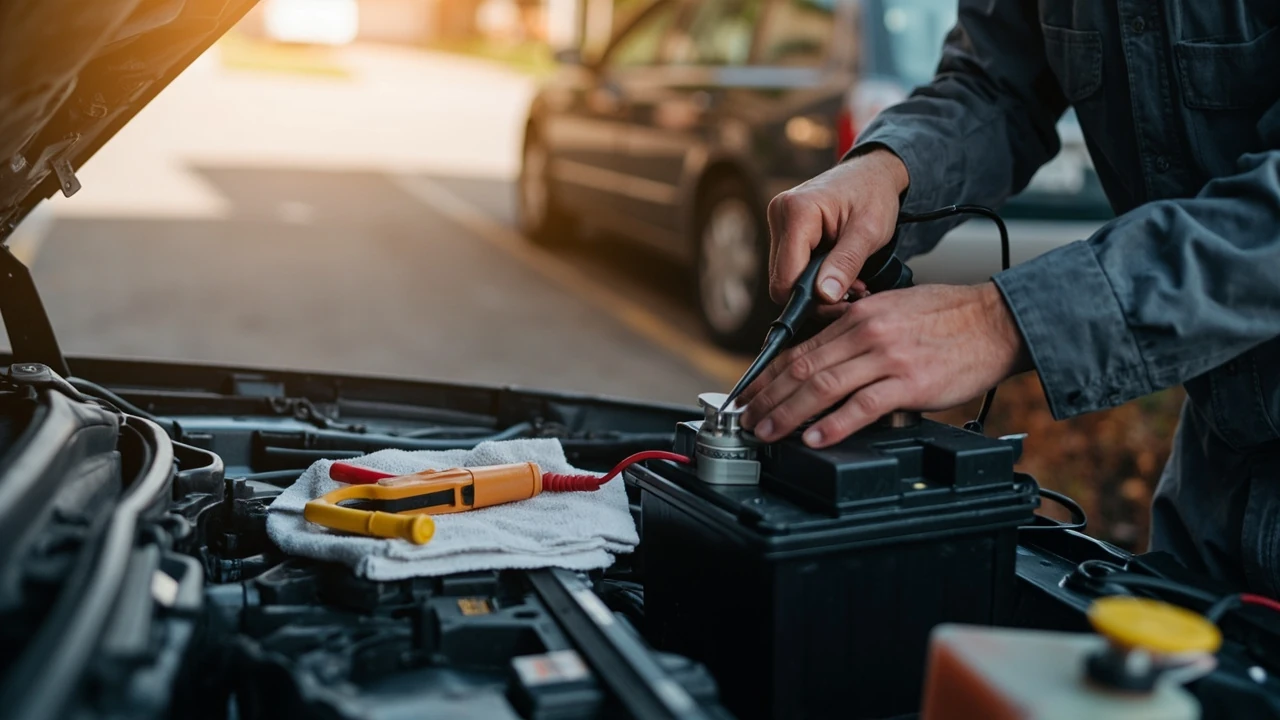
Bad battery symptoms you should never ignore
A car that hesitates on a cold morning, a dome light that dims when you roll the window down, an engine that cranks slowly once and then barely turns at all. These small annoyances are often the first bad battery symptoms, and they usually show up long before the vehicle refuses to start in a parking lot. Recognizing the early warning signs can save a tow bill, a missed appointment, and the frustration of a no-start on a busy day.
A 12-volt lead-acid car battery does more than crank the engine. It stabilizes voltage for the entire electrical system and powers accessories when the engine is off. When the battery’s internal chemistry starts to fade, the symptoms appear in a predictable order: slow cranking, electrical quirks, dashboard warnings, and finally a no-start. This guide walks through those signs one by one, explains what each one usually means, and shows how to confirm whether the battery is the real culprit or whether something else, like the alternator, deserves the blame.
How a car battery actually works
Understanding the basics makes the symptoms easier to interpret. A standard automotive battery stores energy through a chemical reaction between lead plates and sulfuric acid electrolyte. When you turn the key, that stored energy is released as direct current to the starter motor, ignition system, and fuel pump. Once the engine runs, the alternator takes over, producing electricity and recharging the battery for the next start.
Because the battery’s job is to deliver a short, intense burst of power and then accept a slow recharge, it is sensitive to three things: temperature, state of charge, and age. Heat accelerates internal corrosion, cold reduces the chemical reaction that produces current, and every full charge-discharge cycle slowly wears the plates. After enough cycles, capacity drops, internal resistance rises, and the symptoms described in the rest of this page begin to show.
Common bad battery symptoms drivers actually notice
Most drivers do not think about their battery until something goes wrong. The signs below are listed roughly in the order they tend to appear as a battery weakens.
Slow or labored cranking
The most classic early warning is an engine that turns over more slowly than usual. A healthy battery spins the starter briskly, so a sluggish, dragging crank almost always points to a weak battery, very cold weather, or loose or corroded terminal connections. If the engine cranks at normal speed but refuses to start, the problem is more often fuel or spark related, not the battery.
Clicking sound when turning the key
A rapid clicking noise, sometimes a single loud click, comes from the starter solenoid. It means the battery does not have enough voltage to hold the solenoid closed while also spinning the starter. One click usually signals extremely low voltage, while repeated clicking often means the battery has some charge but not enough to do the job.
Dim or flickering headlights and interior lights
Headlights that look weak at idle and brighten when the engine is revved are a textbook sign of a charging problem, but dim lights at all times, especially when the engine is off, are tied to a weak battery. Flickering dashboard lights, a dim dome light, or a sluggish power window can all be early bad battery symptoms worth checking.
Electrical accessories acting up
Modern cars route power through many modules, and a weak battery causes odd behavior before a full no-start. Symptoms can include a radio that resets, a clock that loses time, a alarm that chirps unexpectedly, infotainment glitches, or seat and mirror memory that forgets its position. Because the battery acts as a voltage buffer for the entire system, anything that misbehaves electrically is worth investigating.
Swollen or misshapen battery case
A battery that looks puffy, rounded on the sides, or has a bulging top has usually overheated or been overcharged. Heat damages the internal plates and can vent hydrogen gas, which warps the case. A swollen battery should be replaced promptly, since it may eventually leak or fail without warning.
Corrosion around the terminals
White, blue, or greenish powder on the battery posts is corrosion. A small amount is normal over time, but heavy buildup acts as an insulator and prevents the battery from delivering full current. Terminal corrosion can mimic a bad battery because the engine cranks slowly even when the battery itself is healthy. Cleaning the terminals and re-tightening the clamps often restores normal operation.
Rotten egg smell under the hood
A sulfur or rotten egg odor usually means the battery is venting gas, either because it is being overcharged or because an internal cell is failing. Either way, the smell is a sign to stop using the battery and have it tested. Continued use can corrode nearby components and shorten the life of the alternator.
Battery warning light on the dashboard
The battery-shaped warning light does not always mean the battery itself is bad. It illuminates whenever the charging system voltage is outside the normal range, which can be caused by a weak battery, a failing alternator, a loose belt, or a corroded ground. Treat the light as a prompt to test the system rather than an automatic battery replacement order.
Age-related failure with no warning
Most automotive batteries last roughly three to five years depending on climate, usage, and maintenance. A battery near the end of its life can fail with little warning, especially in hot climates where internal corrosion happens even when the outside of the case looks fine. Tracking the battery’s age, either through a sticker or service records, helps anticipate replacement before the first roadside no-start.
What bad battery symptoms look like in different conditions
The same weak battery behaves very differently in different conditions, and that variability is one reason symptoms are easy to misinterpret. The table below pairs everyday driving conditions with how a weak battery typically responds.
| Condition | Typical weak-battery behavior | Most useful next step |
|---|---|---|
| Cold morning start | Slow crank, may not start at all, dashboard lights dim | Check battery voltage after the no-start, then test the alternator |
| Hot afternoon start after short trips | Swollen case, sulfur smell, dim lights at idle | Inspect for heat damage, clean terminals, plan replacement |
| Engine off, accessories on | Radio resets, dome light dims quickly, phone charger cuts out | Measure resting voltage after the surface charge dissipates |
| While driving | Headlights brighten and dim with RPM, battery light flickers | Check alternator output and belt tension, not just the battery |
| After sitting for several days | No-start, clicking, alarm drained | Look for a parasitic draw or an old battery that cannot hold a charge |
| Immediately after a jump start | Engine runs but stalls shortly after the cables are removed | Test the alternator; the battery is fine but is not being recharged |
Battery symptoms vs. alternator symptoms vs. starter symptoms
Because the starting and charging system is a chain, a weak battery can be confused with a failing alternator, and a tired starter can mimic both. The following comparison helps separate the three based on the most common patterns.
| Symptom | More likely the battery | More likely the alternator | More likely the starter |
|---|---|---|---|
| Slow cranking | Yes, especially in cold weather | No | Possible, with a single clunk |
| Rapid clicking | Yes, classic sign of low voltage | No | No |
| Engine dies right after jump start | No | Yes, alternator is not charging | No |
| Battery light while driving | Possible if battery is very weak | Yes, most common cause | No |
| Grinding or whirring when starting | No | No | Yes, worn starter drive or bearings |
| Dim lights at idle, brighter at higher RPM | No | Yes, classic charging pattern | No |
| Electrical resets when hitting bumps | Yes, often loose terminals | No | No |
When the symptoms match the battery column, a battery test is the right first move. When the symptoms match the alternator column, charging system output should be measured with the engine running. The Firestone Complete Auto Care guide on recognizing alternator versus battery problems describes the same pattern, noting that batteries deliver the energy needed to get the vehicle running while the alternator recharges that energy once the engine is already going.
What causes a car battery to go bad
Understanding the cause behind a failure makes it easier to prevent the next one. A battery rarely dies for a single reason. The most common contributors include:
- Heat damage: high under-hood temperatures accelerate plate corrosion and evaporate electrolyte, the leading cause of failure in warm climates.
- Cold weather: thick engine oil and reduced chemical activity roughly halve a battery’s available cranking power at 0 degrees Fahrenheit.
- Short trips that never let the alternator fully recharge the battery, especially in vehicles with heavy accessory loads.
- Parasitic draw from aftermarket electronics, faulty modules, or a trunk light that stays on.
- Loose or corroded terminals that prevent the battery from delivering its full current.
- Vibration from a loose hold-down clamp, which can crack internal plates over time.
- Long storage periods without a maintenance charger, which allow slow self-discharge and sulfation.
- An overcharging alternator, often caused by a faulty voltage regulator, which boils away electrolyte and warps the case.
How to test a battery at home
A home test is not a substitute for a professional load test, but it can quickly separate a dead battery from a healthy one in a parked car. The steps below assume a basic digital multimeter and reasonable mechanical comfort. If any step feels unsafe, stop and have a professional handle it.
- Turn the engine off, remove the key, and let the car sit for at least an hour so the surface charge dissipates.
- Set the multimeter to DC volts at the 20-volt scale and connect the red lead to the positive terminal, the black lead to the negative terminal.
- Read the voltage. A fully charged resting battery should show roughly 12.6 volts. 12.4 volts is about 75 percent charged, 12.2 volts is about 50 percent, and anything under 12.0 volts indicates a deeply discharged battery that may be sulfated or damaged.
- If the reading is low, try a proper recharge with a smart charger and then re-measure. A battery that climbs back to 12.6 volts and holds it overnight is usually healthy; one that drops quickly is on its way out.
- Start the engine and measure voltage at the battery terminals with the engine running. A healthy charging system typically reads between 13.7 and 14.7 volts. Readings outside that range point to a regulator or alternator issue rather than a bad battery.
- Turn on the headlights, blower motor, and rear defroster to load the system. Voltage should stay above about 13.5 volts at idle. If it drops sharply, the alternator may be weak even if the battery itself is fine.
How mechanics confirm a failing battery
Shops use a conductance or load test to make a final call. A conductance tester sends a small signal through the battery and uses the response to estimate remaining capacity and cranking amps. A load test, less common on modern absorbed glass mat batteries, applies a calibrated current for a set time and watches how voltage falls. Both tests are quick, and many auto parts stores run them for free.
When a battery is replaced, the technician also checks the charging system output, cleans the terminals, and inspects the hold-down clamp. Skipping those steps is a common reason a replacement battery appears to fail within months, when in reality the real problem was a marginal alternator or a loose ground strap.
How to extend the life of a new battery
Once a battery is replaced, a few habits help the next one last closer to its full potential.
- Drive the car long enough each week to top off the charge, especially in vehicles with many electronic accessories.
- Keep the terminals clean and tight, and brush on a thin layer of dielectric grease to slow corrosion.
- Use a maintenance charger or solar tender if the car sits for more than two or three weeks at a time.
- Turn off headlights, heated seats, and climate control before shutting the engine down, so the next start begins with a slightly fuller battery.
- Have the charging system tested once a year after the battery reaches three years of age.
When bad battery symptoms point to a different problem
Several other issues can imitate a bad battery, and replacing a battery will not solve them. A failing alternator produces dim lights and a battery warning even with a brand-new battery. A parasitic draw can flatten a healthy battery in days. A bad ground strap causes slow cranking and odd electrical behavior. A failing starter sounds healthy at the solenoid but refuses to spin the engine. Confirming the real cause saves money and avoids the frustration of replacing parts that were never bad to begin with.
For homeowners, the same logic applies to other battery-powered systems. A backup sump pump that runs for a few minutes and then dies, a smoke detector that chirps at night, a garage door remote that needs to be held close to the opener, or a wall thermostat that loses its programming can all be signs of a weak backup battery. The technology is different, but the diagnostic pattern is the same: slow response, dim output, and eventual failure under load. The Wikipedia overview of automotive lead-acid battery design explains why these symptoms follow the same pattern across so many different devices, since capacity, internal resistance, and voltage drop all degrade together as a battery ages.
When to replace a battery versus when to charge it
A battery that simply ran down because the lights were left on is usually fine after a slow recharge. A battery that is more than four or five years old, has visible swelling, leaks, or has failed a load test should be replaced rather than recharged. Repeated jump starts on a battery that will not hold a charge waste time and risk damage to the alternator and the car’s electronics, including voltage spikes that can harm sensitive modules. When in doubt, a free test at a reputable shop usually settles the question in a few minutes.
Frequently asked questions
What are the most common bad battery symptoms in a car?
Slow cranking, rapid clicking when turning the key, dim headlights, a battery warning light, electrical glitches, a swollen case, terminal corrosion, and a sulfur smell under the hood are the most common bad battery symptoms drivers encounter. A battery that is more than four or five years old with any of these signs should be tested before it leaves you stranded.
Can a car battery be bad even if the lights and radio still work?
Yes. Accessories draw very little current compared with the starter, so a weak battery can power them for hours while still lacking the cranking power needed to start the engine. If you see dim lights, slow cranking, or any electrical quirks, test the battery before assuming the electronics are healthy.
How do I know if it is the battery or the alternator that is bad?
A weak battery usually causes slow cranking, clicking, and a no-start that is fixed by a jump. A weak alternator usually causes the engine to die shortly after a jump, a battery light while driving, and headlights that brighten and dim with engine speed. Measuring battery voltage with the engine off and again with the engine running is the simplest way to separate the two.
How long should a car battery last?
Most automotive batteries last three to five years, with some premium designs reaching six or seven years in mild climates. Hot climates, frequent short trips, and heavy accessory loads can shorten that range, while moderate climates and regular longer drives can extend it.
Can cold weather cause bad battery symptoms even on a healthy battery?
Yes. Cold weather thickens engine oil and slows the chemical reaction inside the battery, which can roughly halve its available cranking power. A battery that is marginal in summer often fails in winter, which is why a fall test is a good idea in regions with harsh winters.
Is a swollen battery case dangerous?
A swollen or bulging battery case usually means the battery has overheated or been overcharged, and the internal plates and electrolyte can be damaged. It can vent hydrogen gas, leak acid, or fail without warning, so the battery should be replaced promptly and the charging system should be tested at the same time.
Will jump starting a car damage a bad battery?
Jump starting a deeply discharged battery is generally safe for the donor vehicle, but a battery that will not hold a charge can be hard on the alternator of the car being jumped because the alternator is forced to recharge a near-dead battery while running all of the vehicle’s electronics. Repeated jump starts on a battery that cannot recover suggest it is time for a replacement.
Do I need to replace the battery if the check engine light comes on?
Not necessarily. The check engine light is tied to the engine management system, not the battery. A weak battery can, however, set false codes or cause drivability issues because voltage fluctuates. After replacing a battery, some cars need a throttle relearn or a scan tool to clear stored codes that showed up while voltage was unstable.
Can a bad battery cause the car to stall while driving?
It can, but it is less common than an alternator or sensor issue. A battery with a badly shorted cell can drag system voltage low enough at high electrical load to cause a stall, especially on vehicles with sensitive electronics. A charging system test is the best way to confirm whether the battery is to blame or whether the alternator, a sensor, or a fuel delivery issue is the real cause.
What should I do right after replacing a bad battery?
Drive the car for at least twenty to thirty minutes to let the alternator recharge the new battery, reset any radio and seat memory presets that were lost, and watch for any new warning lights that may have stored during the previous weak-battery period. If a check engine light appears, have the codes read; some vehicles need a short relearn procedure for idle and throttle settings after a battery replacement.

Leave a Reply