

Mold removal services: what to ask before hiring
If you have found mold at home, describe the water problem as well as the stain when you call a contractor. A leaking pipe, a sewage backup and recurring bathroom condensation call for different assessments. Cleaning a wall while it is still getting wet leaves the cause unresolved.
Ask for a written scope that identifies the affected areas, the moisture work, the materials to be cleaned or removed and the checks planned before rebuilding. A promise to eliminate every airborne spore is not a useful completion standard.
When to get experienced help
EPA’s home-cleanup guidance says a homeowner can often handle an area smaller than about 10 square feet, while more extensive growth or substantial water damage calls for the fuller remediation guidance. The area is one consideration, not a universal legal boundary or proof that a smaller problem is harmless.
Sewage or other contaminated water requires a professional experienced with that damage. Suspected growth in walls also deserves caution: opening a cavity can spread material that was previously enclosed. Do not cut into a wall simply to provide a better photograph for a quote.
If you know or suspect that the HVAC system is contaminated, EPA advises against running it because that can spread mold through the building. A household fan aimed at a moldy wall is not a substitute for a planned work area.
Health concerns and who should stay away from cleanup
The CDC’s cleanup guidance identifies people with immune suppression, underlying lung disease, chronic respiratory conditions or mold allergies as groups who should not take part in cleanup. People with asthma, COPD or compromised immunity should not stay in a moldy home or be present during its cleanup.
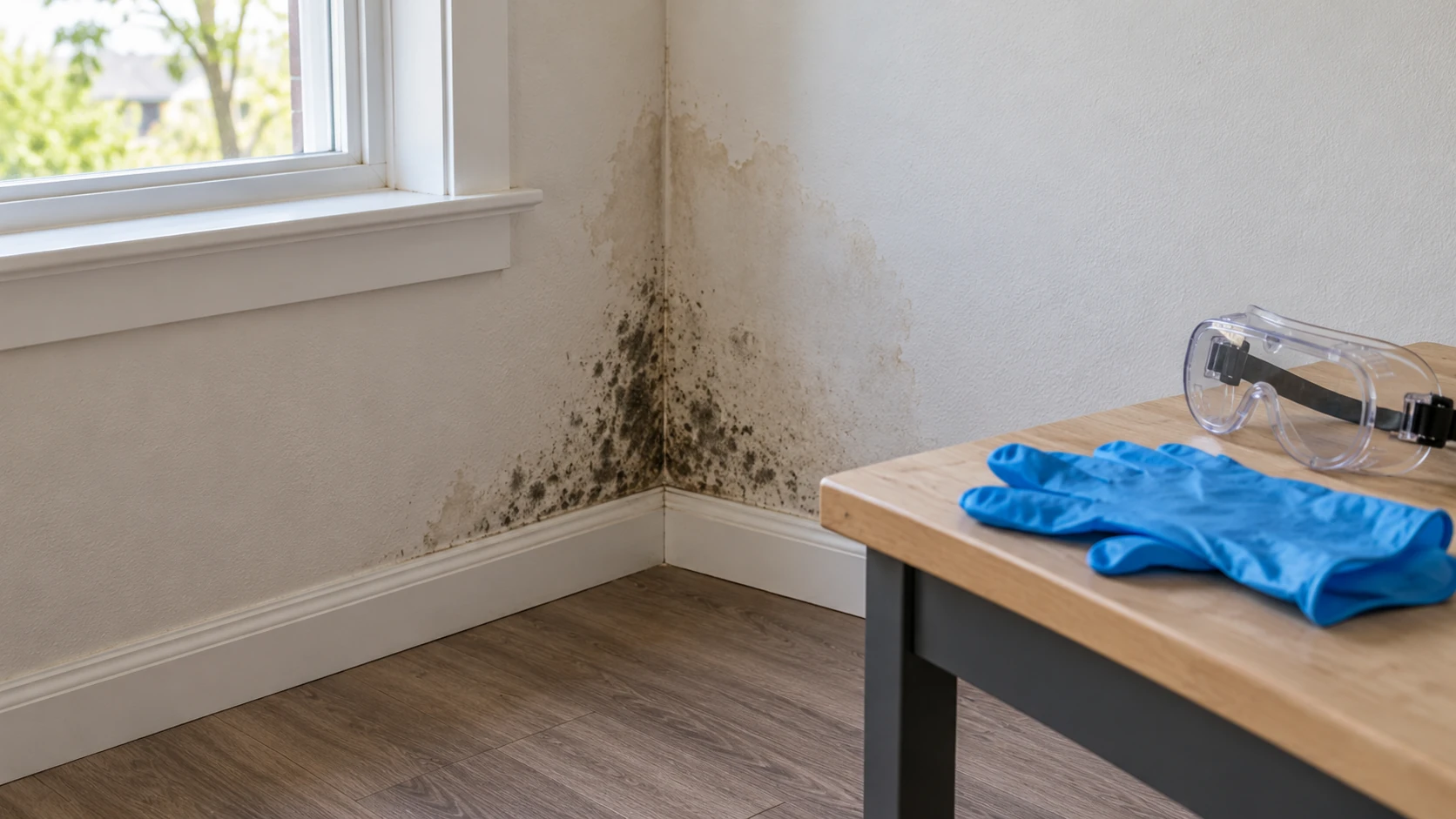
For those doing suitable cleanup work, CDC describes respiratory, eye and skin protection, including at least a NIOSH Approved N95 respirator. A loose surgical mask is not the protection described in that guidance. The gloves and goggles in our cover illustration are not a complete protective-equipment checklist.
Discuss health concerns with a clinician. A contractor cannot determine from a stain whether mold caused someone’s symptoms, and a home-maintenance article cannot diagnose an illness. Do not stay in an affected work area to check the crew’s progress if your health circumstances make exposure unsafe.
What a useful assessment should establish
Ask the assessor to separate observations from assumptions. Where is visible growth? Which materials are wet? Is the leak active? What additional investigation is proposed, and what will it disturb? A moisture meter measures moisture-related conditions; a reading is not a laboratory identification of mold.
Photographs, the history of a leak and access to the relevant building areas can help define the work. The scope may need revision if opening an agreed area reveals further damage. Arrange how such changes will be documented and approved before the work begins.
Materials matter. Moldy absorbent items such as carpet or ceiling tiles may be difficult to clean adequately and may need disposal. Wood is not a nonporous material equivalent to glass or metal; whether it can be retained depends on its condition and the proposed method. Ask why a particular item is being removed or saved rather than accepting a whole-house disposal recommendation without explanation.
Do you need mold sampling?
According to EPA’s sampling guidance, sampling is usually unnecessary when visible growth is already present. There are no EPA or other federal limits for mold or mold spores against which a residential sample can demonstrate compliance.
If someone proposes testing, ask what question it will answer and how the result will change the work. Sampling can have a purpose, but it needs an appropriate plan and interpretation by someone experienced in it. Comparing one indoor sample with an outdoor sample does not create a federal pass-or-fail standard.
The color of growth is not enough to identify a species. Nor does a single test result establish that a home will be suitable for every occupant’s health needs.
Compare the work, not an unsupported national price
Request a property-specific estimate. Price can depend on access, the extent of affected materials, containment, drying, disposal and reconstruction. A bare square-foot figure does not tell you whether repairing the water source or replacing the wall is included.
| Part of the estimate | What to clarify |
|---|---|
| Assessment and investigation | Which areas will be examined, and is any opening of walls included? |
| Moisture correction | Who repairs the leak, drainage or ventilation problem? |
| Work-area controls | How will occupied areas and belongings be protected during this job? |
| Cleaning and removal | Which materials stay, which leave, and what happens to the waste? |
| Drying and completion checks | What observations or measurements will be recorded? |
| Reconstruction | Are replacement finishes included, and who authorizes their installation? |
Ask about the contractor’s relevant experience, references, applicable licensing requirements and insurance. A training credential can inform your choice, but it does not by itself settle the scope of your project or establish that every worker holds a state license.
If you plan an insurance claim, contact the insurer about the actual event, policy terms, documentation and approval process. Do not assume a particular coverage limit or reimbursement merely because a contractor mentioned a common policy type.
Plan access and completion before work starts
Agree on which rooms can be used during the work, how occupants will be kept clear and who will coordinate other trades. Before disturbing older building materials, ask whether additional assessment for hazards such as asbestos or lead is needed. Do not offer to demolish suspect material yourself just to reduce the quote.
The schedule should distinguish water correction, remediation, drying, any agreed verification and rebuilding. The methods and sequence depend on the job. A one-day visit is not automatically inadequate, and a longer visit does not prove that the work is thorough.
In its brief guide for homes, EPA places moisture control at the center of prevention and advises drying water-damaged areas within 24 to 48 hours. That is a reason to act promptly, not an instruction to disturb growth without preparation or wait until the second day to address a leak.
Ask what conditions must be met before finishes cover the area again. Record what was cleaned or removed, how the water problem was addressed and the observations at completion. An independent check may be appropriate for a particular job or contract; it is not a universal federal requirement for every small cleanup.
Questions homeowners often ask
Can I paint over the affected area?
Do not use paint to conceal unresolved growth or dampness. Address the contamination and water problem, and confirm suitable conditions before refinishing.
Should I spray bleach before the contractor arrives?
Ask about the planned work instead of applying chemicals indiscriminately. A spray does not correct wet building materials. Never mix bleach with ammonia or other cleaners.
Does everything wet for two days have to be discarded?
No single elapsed-time rule determines the fate of every item. The material, contamination and ability to clean and dry it matter. Have valuable or sentimental items assessed before authorizing disposal.
Can a company guarantee mold will never return?
A later leak or moisture problem can allow new growth. Ask what a warranty actually covers and what maintenance or follow-up conditions it specifies.
What can I prepare without disturbing the area?
Gather records of the leak, photographs already taken safely and the locations of affected rooms. Keep people clear and arrange professional help for an active water problem where needed. Do not enter an unsafe area to retrieve paperwork.
Where a roof leak is involved, our roofing-materials guide offers separate background for discussing repair choices. Choosing a roofing material does not replace finding the source of the leak.

Leave a Reply