

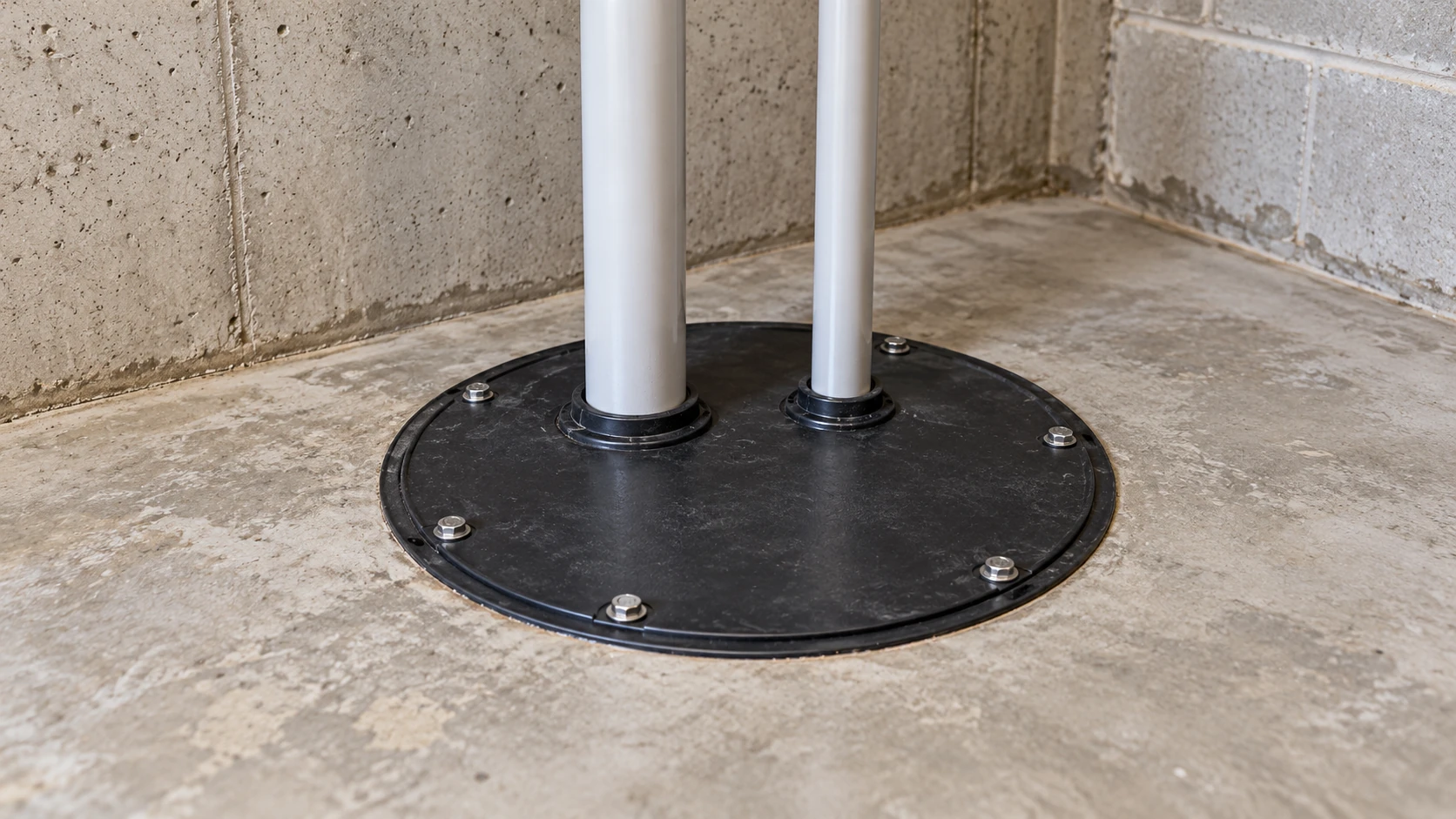
An ejector pump moves wastewater from fixtures that cannot drain by gravity to the appropriate sewer or septic connection. A basement bathroom is one possible application. Being in a basement does not, by itself, prove that a fixture needs a pump: the drain elevations and the available route have to be checked.
For a homeowner, the useful questions are which fixtures the system serves, whether the installed pump is rated for that waste, and what to do if it stops. You do not need to open a sewage basin to start that conversation. Keep the cover closed and use the installation records or ask a qualified contractor to identify the equipment.
How an ejector pump moves wastewater
In a typical sewage-ejector arrangement, connected fixtures drain into a receiving basin. A level control starts the pump as wastewater accumulates. The pump moves it through a discharge line to the system’s approved connection; when the level falls to the specified stopping point, the control switches the pump off.
A check valve limits return flow from the discharge line. The basin cover and vent are also working parts of the installation. Their arrangement, along with any isolation valves and controls, must suit the equipment and the applicable requirements. A cover is not a decorative floor panel to remove for a closer look.
The manufacturer’s LE and LEH sewage-pump manual warns about electrical hazards, wastewater exposure and gases in the system, and assigns installation and maintenance to qualified personnel. Those warnings apply even when the pump appears idle.
Ejector, sump and grinder pumps are different purchases
The Zoeller at Home pump FAQ distinguishes sewage handling from groundwater removal. A sewage pump is designed for the waste specified by its manufacturer. A sump pump intended for groundwater is not a substitute merely because it fits in the available space.
| Pump type | Job to check | What the name does not establish |
|---|---|---|
| Sewage ejector | Moving sewage through a system selected for that application | One universal solids size, motor rating or discharge size |
| Groundwater sump pump | Removing the water specified for that sump-pump model | Approval to receive toilet waste |
| Grinder pump | Cutting specified solids as part of a suitable wastewater system | Permission to dispose of anything that fits down a drain |
A non-grinder sewage ejector can pass its rated solids without cutting them. That is part of its design, not an indication that all solids will jam it. A grinder uses a cutting mechanism, but its allowed waste and operating limits still matter. Select the equipment for the receiving system rather than treating a grinder as an automatic upgrade.
When a basement project needs a closer drainage assessment
Before adding a toilet, laundry area or kitchenette, ask the plumber to establish whether the proposed drains can reach the intended connection by gravity. Fixture location, available elevation and the discharge route belong in that assessment. A generic slope or horsepower recommendation cannot replace it.
If you already have basement plumbing, the absence of a particular round lid does not prove an illegal installation. Equipment may be located elsewhere, or a different approved arrangement may be in use. Drawings, equipment records and an inspection are better evidence than a guess based on the floor.
It is also worth asking which fixtures actually feed the pump. During a fault, that list tells you what must stop being used. Do not assume the system serves the whole house, or that it serves only the toilet next to the basin.
Read the performance information before choosing horsepower
A pump has to deliver the required flow against the resistance of the installed system. Contractors use the pump curve together with the proposed lift and piping losses to evaluate that match. Pipe length, fittings and the discharge conditions affect the selection; the number of bathrooms alone is not enough.
For a specific example, Liberty lists its LE50 series as a 1/2-hp sewage pump with a 2-inch discharge, 2-inch solids handling and a 25-foot shutoff head. Those are model-series specifications. They are not dimensions or a motor recommendation for every basement bathroom.
Shutoff head describes the zero-flow endpoint, not a promise to deliver usable flow at that height. When reviewing a proposal, ask where the intended operating condition sits on the selected model’s curve. Also check the exact model suffix: voltage, control arrangement and cord options can differ within a series.
| Detail | Reason to record it |
|---|---|
| Exact pump and control models | A series name alone may leave electrical and control choices unspecified |
| Fixtures and waste served | The selection should match what enters the system |
| Design flow and head assessment | They explain the proposed operating point on the pump curve |
| Basin and usable pumping volume | Overall tank size does not by itself describe the operating cycle |
| Alarm and outage plan | A warning and a way to move wastewater are different provisions |
There is no universal healthy cycle time
How often the pump starts depends on incoming wastewater, the usable volume between control levels, and the delivery rate in that installation. A statement such as “every cycle should take 10 to 30 seconds” leaves out those conditions. So does an alarm threshold based only on starts per hour.
Pay attention to a change from the system’s usual behavior. A pump that now seems to run continuously, an alarm, or wastewater returning into fixtures calls for assessment. A noise alone does not identify a failed check valve, blocked impeller or electrical fault.
From a dry, safe location, note what you heard and which fixtures were in use. That information can help the contractor. Opening the lid, lifting a float or pouring water into the basin is not part of this homeowner observation checklist.
What to do when an alarm sounds or wastewater backs up
Stop using the fixtures known to feed the affected system and contact the responsible service provider. If you do not know which fixtures those are, ask before adding more wastewater. Keep people and pets away from any overflow.
Do not step into water to reach the pump, touch wet electrical equipment or keep resetting a breaker that trips. Do not lift the basin cover to investigate an odor. Tell the contractor about the alarm, visible leakage, electrical symptoms or unusual smell without trying to diagnose the cause yourself.
An alarm is a warning device, not proof that a backup pump is operating. Ask what the installed alarm detects and whether it still works during loss of mains power. Keep its instructions where you can find them before an emergency.
Backup plans must be rated for sewage
A product marketed as a basement backup pump may be intended only for groundwater. For example, the current Liberty SumpJet manual specifies clear water and excludes wastewater, sewage and effluent. It must not be presented as a sewage-ejector backup.
The same compatibility question applies to a battery-powered unit. Check that the entire proposed arrangement is suitable for the waste and duty, not simply that it can run without utility power. Ask a qualified contractor to specify any standby power or alternative pumping arrangement and to explain its limitations.
While the primary pump is unavailable, reducing inflow from its connected fixtures is part of the immediate plan. A basin has finite storage; do not assume it will hold a household’s normal use for a particular number of hours. Keep the service contact and fixture list with the equipment records.
Maintenance without an open-basin DIY routine
Use the schedule and procedures for the actual installed model, adjusted by the responsible service professional for the application. An annual lid-opening and cleaning instruction is not suitable generic advice for every sewage system. Neither is a pump replacement deadline based solely on age.
The LE and LEH manual requires suitable power isolation before service and warns against entering a used basin. It also excludes inappropriate materials, including wipes and other consumer items besides toilet paper, from non-grinder systems. Keep grease and unsuitable chemicals out of the drains. A solids-handling rating is not a disposal list.
A homeowner can keep the service area accessible, retain manuals and record completed work. Do not cover the service opening with permanent flooring or leave equipment records inside the basin. For a safe record, photograph an accessible external label only if it can be reached without opening or touching the system.
Repair, replacement and the quote
A change in operation needs a diagnosis before a purchasing decision. A contractor may identify a serviceable control or valve problem, a damaged pump, or a mismatch elsewhere in the installation. A breaker trip on a warm day does not establish that the motor needs replacement.
Ask the quote to separate the diagnosed fault from the proposed remedy. If a new pump is recommended, request the reason, the exact replacement model, compatibility checks and any work required to the existing basin or controls. A larger motor is not automatically the answer.
For a new installation, compare the full scope. Equipment price alone does not include every possible access, excavation, plumbing, electrical, permit or restoration cost. Local requirements and site conditions vary. I would ask each bidder to list exclusions so that an inexpensive-looking quote can be compared with a more complete one.
Confirm with the local authority and qualified contractor which permits, inspections, venting and electrical provisions apply. A manufacturer manual describes its equipment; it is not evidence that a particular home has passed inspection.
Questions homeowners ask about ejector pumps
Does every basement bathroom need an ejector pump?
No. The need depends on the drain elevations, route and suitable connection. Have those checked before choosing a system.
Can a sewage ejector pass solids without being a grinder?
Yes, within its stated rating and allowed waste. Check the exact model. Passing rated solids and cutting them are different functions.
Can I use a sump backup for a sewage basin?
Do not assume compatibility. The cited SumpJet product is expressly for clear water, not sewage. Any backup arrangement must be selected for the actual application.
How long should an ejector pump last?
This guide does not assign every model a seven-to-ten-year life. Keep service records and evaluate condition, use, manufacturer guidance and the diagnosed fault. Age alone does not identify the remedy.
Can I lift the cover to identify the pump?
Leave the sewage-basin cover closed. Start with records or accessible external information, and arrange qualified identification or service when needed.
What size pump should I buy for one bathroom?
The fixture count alone is insufficient. Ask for a selection based on the proposed system, its flow and head requirements, and the manufacturer’s curve and limits.
For more planning and maintenance articles, browse Home Improvement.

Leave a Reply