

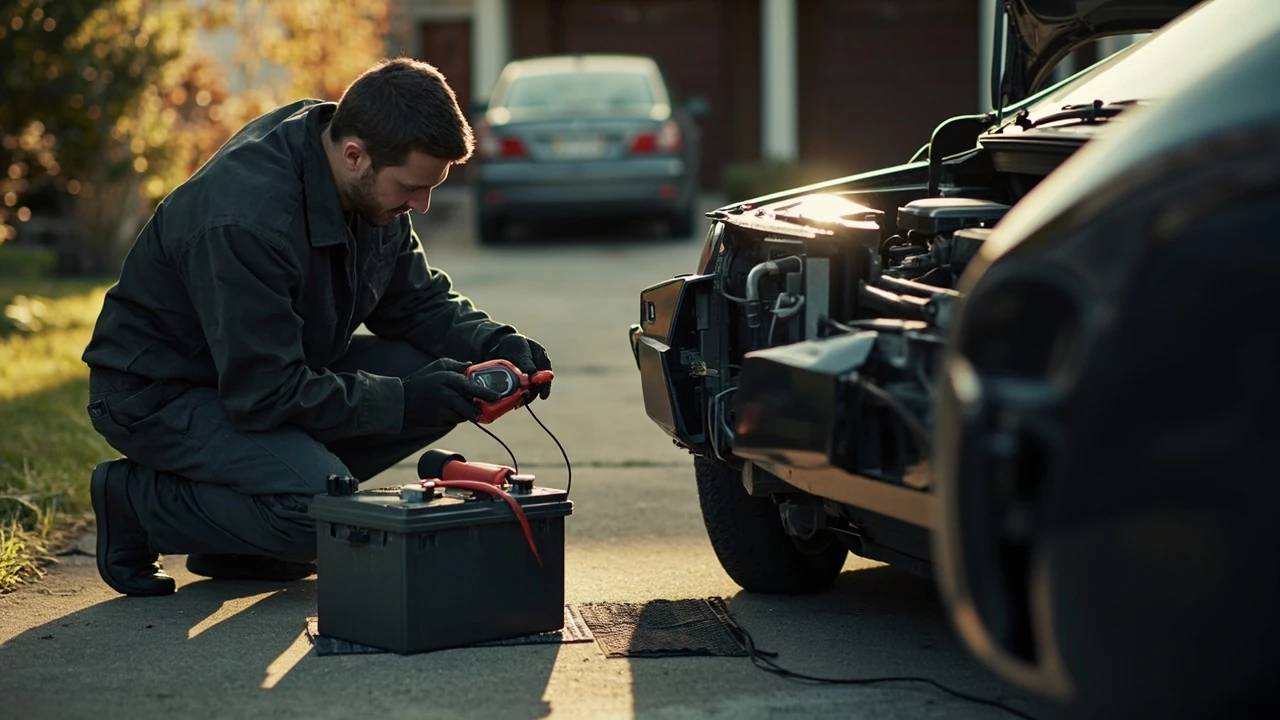
Car battery service
A driver turns the key on a Tuesday morning, the dashboard lights flicker, and the engine turns over once before going silent. A week earlier the same car started without hesitation, so the failure feels sudden, but the underlying problem usually builds for months. A scheduled car battery service is the practical way to catch that problem before it strands you, and the term covers more ground than most people expect.
This guide explains what a car battery service actually includes, how to tell whether you need a test, a recharge, or a full replacement, what the work typically costs, and how to choose between a mobile technician, a general repair shop, and a dealership. The goal is to help you make a calm, informed decision next time your vehicle shows the first sign of battery trouble.
What a car battery service actually covers
The phrase “car battery service” is used loosely in the industry. A parts store may apply it to a free two-minute voltage check, while a mobile mechanic may use it to describe a complete on-site replacement. The core tasks, however, are consistent across providers.
- Visual inspection of the battery case, terminals, and hold-down hardware
- Voltage and load testing with a digital tester
- Alternator output and parasitic draw checks when symptoms suggest a charging problem
- Terminal cleaning and corrosion treatment
- Battery registration or coding on vehicles that require it
- Safe removal and environmentally responsible recycling of the old unit
- Installation of a new battery matched to the vehicle’s group size and specifications
A basic visit is short and inexpensive. A diagnostic visit that includes charging system testing takes longer, and a full mobile replacement adds travel time and the cost of the new battery. Knowing which version of the service you are booking is the difference between a $20 trip and a $400 invoice.
How often a car battery needs attention
Most modern lead-acid starting batteries last between three and five years under normal conditions. AGM batteries, which are common in vehicles with start-stop systems and heavy electrical loads, often stretch a little longer when they are kept on a proper float charge. Heat, deep discharge cycles, and short-trip driving all shorten life. A useful rule of thumb is to plan a proactive check at year three and again at year five, even if no symptoms have appeared.
Warning signs that should trigger a service call
Batteries rarely fail without warning. The earliest signs are easy to miss because the car still starts, just less eagerly than it used to.
| Symptom | What it usually means | Recommended next step |
|---|---|---|
| Slow cranking on cold mornings | Reduced cold cranking amps from age or sulfation | Schedule a voltage and load test within a week |
| Clicking sound when turning the key | Insufficient voltage to engage the starter | Test the battery and the charging system together |
| Dashboard battery light stays on while driving | Alternator not keeping the battery topped up | Full charging system diagnostic, not just a battery swap |
| Swollen or cracked battery case | Heat damage or overcharging | Replace immediately and inspect the voltage regulator |
| White or bluish powder on the terminals | Corrosion interfering with the connection | Clean, retest, and apply anti-corrosion pads |
| Headlights dim at idle, brighten with revs | Weak alternator output | Alternator test before replacing the battery |
| Need to jump the car more than once in a month | Battery no longer holding a charge or parasitic draw | Load test and parasitic draw measurement |
Each row points to a different underlying cause, and the wrong fix wastes money. A new battery installed on a car with a failing alternator will be dead again within days. A parasitic draw that drains a healthy battery overnight will frustrate any technician who only swaps parts.
The main battery types a service can install
Not every battery is interchangeable. Choosing the right type matters as much as choosing a reputable brand, and a good service visit starts with confirming which technology the vehicle was designed for.
| Battery type | Typical use case | Strengths | Limitations |
|---|---|---|---|
| Flooded lead-acid | Standard vehicles without start-stop | Lowest cost, widely available | Requires occasional electrolyte checks, vents gas |
| AGM (absorbed glass mat) | Vehicles with start-stop and heavy electrical loads | Maintenance-free, strong vibration resistance, longer life | Higher cost, sensitive to overcharging |
| EFB (enhanced flooded battery) | Entry-level start-stop vehicles | More durable than flooded, cheaper than AGM | Not a direct AGM replacement in high-load cars |
| Lithium-ion (LiFePO4) starter | Performance and specialty applications | Lightweight, very low self-discharge | Expensive, not compatible with all charging systems, cold-weather limits |
A reliable technician will identify the original equipment specification in the owner’s manual and match it before installing anything. Putting a flooded battery into a car whose charging system is calibrated for AGM can shorten the new battery’s life and confuse the energy management module.
What happens during a typical service visit
Once you book a car battery service, the visit usually follows a predictable sequence. Knowing the steps helps you judge whether the technician is being thorough or just rushing through a swap.
- Confirm the vehicle’s battery group size, terminal orientation, and required cranking amps from the manufacturer specification.
- Inspect the battery tray, hold-down clamp, and cables for corrosion, cracks, or loose hardware.
- Measure resting voltage, then perform a conductance or load test to assess state of health.
- Test alternator output and, when warranted, measure parasitic draw with a multimeter in series.
- Decide between cleaning and recharging, or full replacement, and explain the reasoning.
- If replacing, register or code the new battery on vehicles that require it through the OBD-II port.
- Recycle the old battery through an approved handler and provide a receipt.
Steps five and six are where the quality gap between providers shows up. A registry step is essential on many European models from the mid-2010s onward, and skipping it can cause early failure of the new battery and dashboard warning lights.
Mobile service versus in-shop service
The choice between a mobile technician and a traditional shop has practical consequences for cost, convenience, and the range of services that can be performed. Both options are legitimate, and the right answer depends on the situation.
| Factor | Mobile car battery service | In-shop car battery service |
|---|---|---|
| Convenience | Service comes to your driveway, office, or parking lot | Requires driving the car to the shop, or a tow if it will not start |
| Typical turnaround | Often under an hour on site, same-day in many markets | 30 to 90 minutes plus any shop wait |
| Upfront pricing | Usually quoted before dispatch | Estimated after a brief diagnostic |
| Best for | Dead batteries, time-pressed drivers, fleet vehicles | Complex electrical diagnostics, warranty work, battery registration |
| Limitations | Weather, parking access, and some advanced programming tasks | Less flexible scheduling, longer total time away from the car |
For a straightforward replacement on a vehicle that does not require complex coding, a mobile visit is hard to beat. For a battery that has died repeatedly with no clear cause, the diagnostic equipment at a full-service shop is usually worth the extra trip.
What a car battery service typically costs
Costs vary by region, vehicle, and battery type, but the structure is consistent. A mobile car battery replacement usually falls in the $300 to $600 range when parts, labor, travel, and disposal are included, while a standard in-shop replacement with a regular flooded battery can run lower. Premium AGM batteries and certain luxury vehicles push the total higher because the part itself costs more and the registration step adds labor time.
A standalone diagnostic or charging system test at a parts store is often free or under $30. That low entry price is useful for confirming that the battery is the actual problem before paying for a full replacement.
How to prepare for a service visit
A little preparation makes the visit faster and the result more reliable. Keep the vehicle accessible, know where the battery sits, and clear the surrounding area of clutter. Have the key fob ready, because some vehicles need to be in a specific ignition state for the technician to access the battery management menu. If the car has been jump-started recently, mention it, because that information changes the diagnostic picture.
- Confirm the battery’s physical location, which can be under a seat, in the trunk, or under a plastic cover
- Make sure the technician can access the OBD-II port for registration if your vehicle requires it
- Remove aftermarket electronics that draw power, so the parasitic draw reading is accurate
- Have a recent repair history handy, especially any alternator or electrical work
These small steps shorten the visit and reduce the chance of follow-up questions.
How to choose a trustworthy provider
Credentials, transparency, and the quality of the diagnostic conversation are the signals that matter most. A provider who quotes a replacement before testing the old battery is a red flag, as is anyone who refuses to show you the test results or recycle the old unit properly.
- Look for ASE-certified technicians or manufacturer-specific training for your brand.
- Ask whether the diagnostic includes a printed or digital report of voltage and load test numbers.
- Confirm that the new battery carries a written warranty of at least two to three years.
- Check that the provider handles recycling through an EPA-approved handler.
- Read recent reviews that mention the specific model of car you drive, not just generic praise.
None of these checks take long, and together they filter out most of the providers who would treat the job as a quick parts swap.
Common mistakes that shorten battery life
Most premature failures are caused by a handful of habits and oversights. Avoiding them is cheaper than any service plan.
- Leaving the vehicle parked for weeks without a maintenance charger, especially in cold climates
- Taking frequent short trips that never let the alternator recharge the battery fully
- Ignoring a parasitic draw from a trunk light, aftermarket stereo, or stuck relay
- Skipping terminal cleaning until the connection is visibly compromised
- Installing a battery with the wrong group size or terminal layout, which forces poor cable routing
Each of these adds stress that a proper service visit can spot early, but the visit still costs less than a tow and a no-start situation.
When the battery is not the real problem
It is worth saying plainly that a dead battery is sometimes a symptom rather than the disease. A failing alternator can mimic battery failure, and a parasitic draw can kill a brand-new unit overnight. A careful service visit distinguishes these cases before charging you for a part you do not need. If the technician only tests the battery and never measures charging output, ask why before agreeing to a replacement.
For drivers who want a single reference point, the car battery overview from Wikipedia covers the chemistry, history, and common failure modes of automotive batteries in more detail. A practical view of how a mobile replacement is scheduled and priced on a national scale is also available from established providers; one example is the battery replacement service offered by Instant Car Fix, which describes how a mobile technician tests, replaces, and recycles a battery on site.
Seasonal considerations for U.S. drivers
Heat is harder on a battery than cold, even though cold is what usually kills a weakened one. In the Sun Belt, electrolyte loss and grid corrosion shorten life even when the car starts easily. In northern states, a battery that worked fine in October may not turn the engine over in January because cold reduces available cranking amps. Planning a service visit in early fall, before the first hard freeze, is a sensible habit for any car that is more than three years old.
What to do after a new battery is installed
A new battery performs best when the rest of the charging system is healthy. A short follow-up routine protects the investment.
- Drive the car for at least 30 minutes to let the alternator bring the battery to a full state of charge
- Reset the clock, radio presets, and any window auto-up features that lost memory during the swap
- Note the installation date and the battery’s warranty terms in the owner’s manual
- Schedule a no-cost voltage check six months later, especially before the first deep cold snap
These steps take minutes and give you a useful baseline for the next service interval.
Frequently asked questions
How long does a car battery service take?
A standard test and cleaning visit usually takes 15 to 30 minutes. A full mobile replacement, including travel and setup, is typically under an hour once the technician is on site. A diagnostic that includes charging system and parasitic draw testing can run 45 to 90 minutes.
How do I know whether I need a new battery or just a recharge?
A load test or conductance test shows the battery’s state of health as a percentage. Above about 75 percent and with clean terminals, a recharge and a check of the charging system is often enough. Below 50 percent, replacement is usually the more reliable answer, especially on a battery that is more than four years old.
Do all cars need battery registration after replacement?
No. Many vehicles simply need a new battery installed and the clock reset. Models with intelligent battery sensors, including most European brands from the mid-2010s onward, require the new battery to be registered through the OBD-II port so the energy management module can adjust charging behavior. Your service provider should know which category your car falls into.
Is a mobile car battery service as reliable as a shop visit?
For a straightforward replacement, yes. Mobile technicians carry the same diagnostic tools, the same battery grades, and the same disposal methods as shops, and they add the convenience of coming to you. For complex electrical diagnostics, a shop with a full bay of equipment is usually the better choice.
What affects how long a car battery lasts?
Heat, vibration, frequent short trips, prolonged sitting, and a weak alternator all shorten life. Climate-controlled garages, regular driving, and a maintenance charger during long storage all extend it. Most batteries reach the end of their useful life between the third and fifth year.
Can a car battery service include alternator testing?
It should. A complete service visit checks both the battery and the charging system, because the two are linked. Replacing a battery without checking the alternator can leave you stranded again within days if the charging system is the real fault.
How much does a car battery service cost on average?
Costs vary by vehicle, battery type, and provider, but a mobile replacement with parts and labor often falls in the $300 to $600 range. A simple in-shop test may be free or under $30. Premium AGM batteries and registration requirements add to the total.
What should I do with my old battery?
Any reputable service provider will recycle the old battery through an approved handler, since lead-acid batteries are nearly fully recyclable. You should receive a receipt or confirmation, and you should never be charged a separate disposal fee on top of the replacement price.
Can extreme cold permanently damage a battery?
Cold does not usually kill a healthy battery on its own, but it reveals a weak one by reducing available cranking amps. A battery that was already near the end of its life can freeze in extreme cold, which permanently damages the case and plates. That is why a fall inspection is so valuable in northern climates.
How do I extend the life of a new car battery?
Keep the terminals clean, drive the car regularly, avoid leaving accessories on when the engine is off, and use a maintenance charger if the car sits for more than a couple of weeks. A quick voltage check twice a year catches small problems before they become a no-start morning.

Leave a Reply