

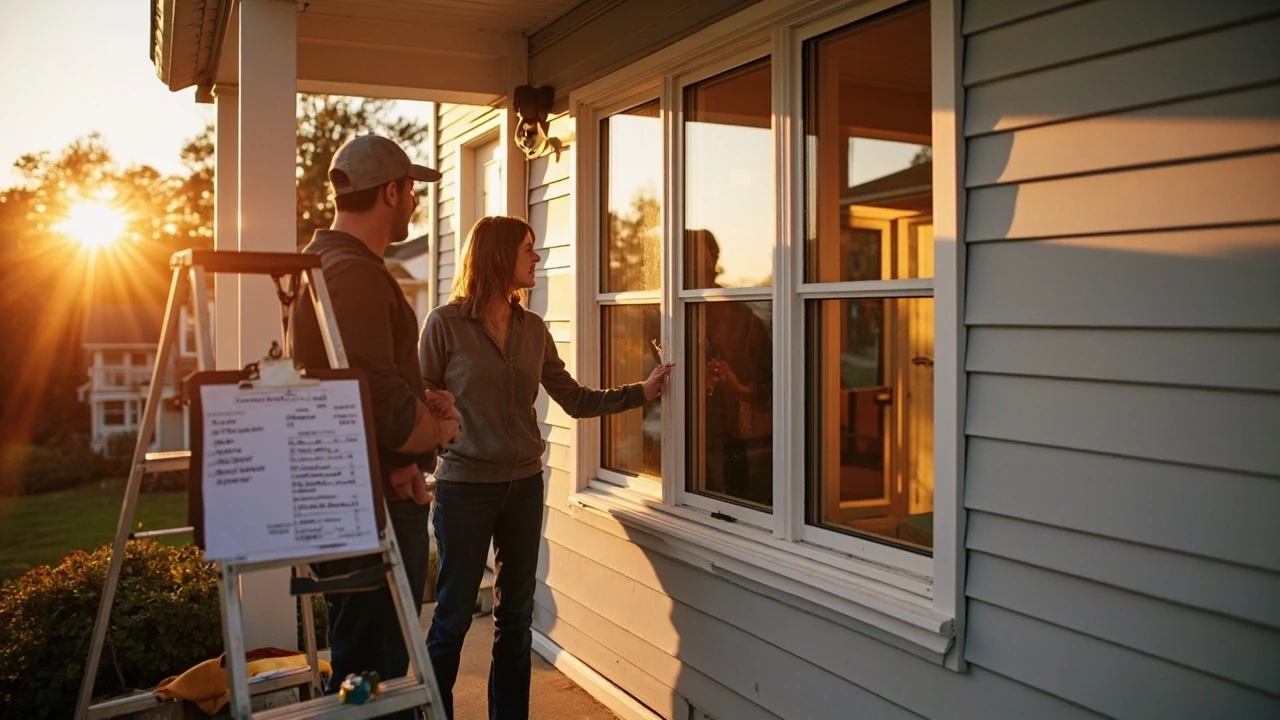
Cost of window replacement: what U.S. homeowners actually pay in 2026
A drafty bedroom, a foggy pane between the glass, and a quote that lists seventeen line items can turn a simple upgrade into a budgeting puzzle. The cost of window replacement covers the window unit itself, the labor to remove the old one and install the new one, the trim and insulation work around the opening, and any disposal fees. When each of those pieces is broken out, the final number stops feeling mysterious and starts to look like a series of decisions a homeowner can actually make.
Across the United States, a typical full-frame window replacement project for a single-story home with ten openings lands somewhere between $7,000 and $15,000 before tax credits or rebates, with most homeowners reporting a final bill in the $9,000 to $12,000 range. Individual window costs vary widely, from about $300 for a basic vinyl unit installed to $2,000 or more for a large custom fiberglass or wood-clad assembly. Knowing where your project sits on that spectrum starts with understanding what is actually being priced.
What “cost of window replacement” really includes
Most window quotes bundle three broad categories: the window unit, the labor, and the project extras that often appear at the bottom of the estimate. Reviewing them separately helps you compare bids apples to apples.
- The window unit. Frame material, glass package, size, and operating style all change the price of the window itself.
- Labor and installation. Removal of the old unit, prep of the rough opening, shimming, sealing, and trim work.
- Disposal and project overhead. Hauling away the old windows, permits in some jurisdictions, and any required structural repairs discovered during the work.
Some contractors quote “all-in” prices that absorb the extras, while others break them out. The all-in number matters most for your budget, but the line items matter when you compare one bid against another.
Average cost of window replacement at a glance
The table below summarizes typical U.S. price ranges drawn from industry guidance and major remodeling cost surveys. Treat these as planning figures, not quotes, since labor rates and window availability vary by region.
| Project size | Typical scope | Low end | Mid range | High end |
|---|---|---|---|---|
| Single window, standard size | Double-hung vinyl, retrofit | $300 | $600 | $1,000 |
| Single window, premium | Fiberglass or wood-clad, full-frame | $900 | $1,500 | $2,500 |
| Whole-home, 10 windows | Mid-grade vinyl, retrofit | $5,000 | $9,000 | $13,000 |
| Whole-home, 10 windows | Premium fiberglass or composite | $10,000 | $15,000 | $22,000 |
| Custom bay or bow unit | Structural framing, custom glass | $2,000 | $3,500 | $6,000+ |
| Full-house, 25+ windows | Custom layout, multi-day crew | $18,000 | $30,000 | $45,000+ |
These figures include both product and labor. If a quote looks dramatically lower than these ranges, ask which scope elements were excluded, since some companies price only the windows and add installation as a separate line.
Cost of window replacement by frame material
Frame material is usually the single largest driver of the window’s share of the total cost. The same opening can change price by a factor of three or more depending on what surrounds the glass.
| Frame material | Price per window, installed | Lifespan (with care) | Best fit |
|---|---|---|---|
| Vinyl (virgin PVC) | $300 to $800 | 20 to 30 years | Budget projects, mild climates |
| Composite | $600 to $1,200 | 25 to 35 years | Balance of cost and performance |
| Fiberglass | $800 to $1,500 | 30 to 40+ years | Harsh climates, long-term owners |
| Wood-clad | $900 to $1,800 | 30+ years | Traditional homes, painted interiors |
| Solid wood (custom) | $1,200 to $2,500 | 30 to 50 years | Historic restoration, high-end builds |
| Aluminum | $500 to $1,200 | 20 to 30 years | Modern commercial-style residences |
Industry sources commonly note that fiberglass and wood-clad windows tend to last the longest when maintained, while vinyl delivers the strongest upfront value. A For additional context, recent overview of replacement window pricing and value highlights similar ranges, with fiberglass or composite often landing in the $800 to $1,500 range per window and custom shapes running higher.
Cost of window replacement by operating style
Beyond material, the way a window opens changes both the price and the long-term maintenance. Some styles require more hardware, more complex balances, or heavier glass.
- Single-hung: the most affordable style, with a fixed upper sash and a movable lower sash. Good for upper floors where cleaning the outside is harder anyway.
- Double-hung: both sashes slide, which adds hardware but improves ventilation and cleaning access. Typically 10 to 20 percent more than a single-hung.
- Casement: crank-operated, side-hinged. Often the most energy-efficient because the sash presses firmly against the frame when locked, but the operating hardware adds cost.
- Awning and hopper: hinged at the top or bottom, useful for bathrooms and basements. Generally priced similarly to casements.
- Sliding or gliding: a sash slides horizontally. Common over kitchen sinks and in modern homes, with prices between double-hung and casement.
- Picture (fixed): no operable parts, the lowest-cost option per square foot of glass, and the most energy-efficient because there are no air leaks around moving parts.
- Bay and bow: projecting assemblies that combine fixed and operating sashes. Structural framing inside the wall, custom glass, and a roof on some bay units push costs into the $2,000 to $4,000 range per assembly.
How window size and shape change the price
Window pricing is mostly per square foot of glass, so the larger the opening, the higher the bill. A 24-by-36-inch bathroom window is a very different product from a 60-by-72-inch living room picture window, even if both are vinyl.
- Standard sizes: carried in stock by most manufacturers. Retrofit installations in these sizes are the most affordable because the installer is not building a custom frame.
- Common large sizes: still considered standard, but heavier. Expect about 20 to 35 percent more than a small standard unit in the same material.
- Custom sizes: made to order, with longer lead times and a noticeable price premium, especially for shapes that are not rectangles.
- Architectural shapes: arches, circles, triangles, and trapezoids require custom glass and frames. Each one can add several hundred dollars to a project.
Retrofit versus full-frame replacement
The installation method has a quiet but meaningful effect on the total cost of window replacement. Most homeowners choose one of two approaches.
| Approach | What stays | What gets replaced | Typical cost per opening | When it makes sense |
|---|---|---|---|---|
| Retrofit (pocket) | Existing frame in the wall | Sashes and operable hardware | $300 to $800 | Frame is square, sound, and matches the new unit |
| Full-frame | Rough opening and sheathing | Frame, sashes, trim, and flashing | $600 to $1,500 | Rot, water damage, or desire to change size |
| New-construction | Wall framing | Frame, nailing flange, and flashing | $700 to $1,800 | Major remodel or addition that exposes the wall |
A retrofit install keeps the existing frame and trims, which is faster and cheaper but only works when the original frame is square, free of rot, and matches the new window’s dimensions. A full-frame replacement removes everything back to the rough opening, allowing the installer to inspect for hidden damage and correct any water-management issues. It costs more, but it is often the right call on homes over thirty years old.
Glass packages, coatings, and efficiency upgrades
The glass in a window is where the most energy performance lives, and where you can spend extra for measurable comfort gains. The basic option is a single pane, but almost every modern replacement window is double-pane insulated glass with a low-E coating and an inert gas fill between the layers.
- Double-pane, low-E, argon fill: the standard for most replacements, and a meaningful step up from old single-pane units.
- Triple-pane, low-E, krypton or argon fill: about 15 to 25 percent more per window, with noticeably better sound reduction and comfort near busy streets.
- Impact-resistant laminated glass: required in some coastal zones, optional elsewhere, and a significant premium for safety and noise control.
- Tinted or reflective coatings: can reduce glare and solar heat gain, useful on south- and west-facing walls.
- Decorative or patterned glass: used in bathrooms and entryways, priced per square foot and often adding $50 to $200 per opening.
Labor, permits, and regional pricing
Labor usually accounts for 30 to 50 percent of the total cost of window replacement, which is why quotes vary so much between regions. A crew working in a high-cost metropolitan area bills more per opening than a small town crew several states over, and disposal fees, parking restrictions, and union rules all influence the number on the page.
- Permits: not always required for like-for-like window swaps, but commonly required when you change the size of an opening or alter a structural header. Budget $50 to $300 per permit where applicable.
- Lead-safe work practices: in pre-1978 homes, federal rules require lead-safe procedures and documentation, which add labor time and modest fees.
- Seasonal pricing: spring and fall are the busiest seasons, and contractors may discount during slower winter months in cold climates or summer months in mild regions.
- Travel and minimums: rural jobs sometimes carry trip charges or a minimum number of openings to make the day worthwhile for the crew.
How to read a window replacement quote
A clean estimate removes most of the mystery from the cost of window replacement. When a quote arrives, the line items worth comparing across bidders include the window make and model, the size, the glass package, the installation method, the warranty, the disposal fee, and any allowances for rot repair.
- Confirm window specifications. Frame material, glass thickness, low-E coating, gas fill, and the U-factor and Solar Heat Gain Coefficient ratings should be listed for each opening.
- Check installation scope. Make sure the quote covers interior and exterior trim, insulation around the frame, and weatherproofing, not just setting the unit in the hole.
- Look for allowances. A line that reads “rot repair, $75 per linear foot” is fair, but an open-ended “miscellaneous repairs” line is a red flag for budget creep.
- Verify the warranty. Manufacturer warranties often cover the glass and frame for 20 years or more, while labor warranties are commonly two to ten years. Make sure both are spelled out.
- Ask about rebates and credits. Some utilities, states, and federal programs offer incentives for energy-efficient upgrades. Your contractor should be able to tell you which ones apply to your project.
Ways to keep the cost of window replacement under control
A few smart decisions can lower the bill without sacrificing comfort or performance. The trick is to keep the high-impact upgrades and trim the cosmetic ones you will not notice in daily use.
- Prioritize windows with the worst performance. Replacing the most drafty or fogged units first, then budgeting for the rest in a second phase, spreads the cost over two or three years.
- Stay close to existing sizes. Holding the same rough opening sizes allows retrofit installation and avoids structural framing work.
- Group openings on the same wall. Crews work faster when the windows are close together, and a multi-window discount is common.
- Choose the right operating style for each room. A picture window in a hallway is cheaper than a double-hung and lets in the same light.
- Schedule during the off-season. Ask about winter or late-summer availability in your region; many contractors will price more aggressively when their schedule is open.
- Take advantage of incentives. Federal, state, and utility rebates can shave several hundred to a few thousand dollars off a whole-home project.
Return on investment and resale considerations
Homeowners often ask whether window replacement pays for itself. The honest answer is that it depends on the home, the market, and how long the owner plans to stay. Industry data points to a return on investment that commonly lands in the 50 to 85 percent range when both energy savings and resale value are counted, with the upper end more likely on mid-range projects that match the neighborhood’s price point. Premium materials and custom shapes can push the return down because buyers do not always pay extra for upgrades they did not choose themselves.
For owners who plan to stay, the value is mostly in comfort and lower utility bills. For owners who plan to sell within a few years, a well-matched mid-grade product in standard sizes often returns more of its cost than a fully customized package, simply because the next buyer is more likely to value a clean, neutral window choice over a high-end upgrade they did not select.
When replacement beats repair
Not every window problem calls for a full replacement. A broken balance, failed seal between the panes, or a worn crank can sometimes be repaired for a fraction of the cost of a new unit. Replacement becomes the better choice when the frame itself is failing, when condensation is showing up between the panes on multiple units, or when the windows are simply too old to find replacement parts for.
- Repair makes sense when one or two units have a failed seal, a broken balance, or a cracked pane, and the frames are otherwise sound.
- Replacement makes sense when frames are soft, rotting, or out of square, when multiple units show interior fogging, or when the windows are past the 20-year mark in a harsh climate.
If you are weighing a single repair against a full project, a quick inspection of the frame and the exterior trim around each window usually answers the question. Soft wood, peeling paint that keeps coming back, and daylight visible around the frame are all signs the unit has reached the end of its useful life.
Common hidden costs to watch for
Even careful estimates can miss things that only show up once the old window is out of the wall. A modest contingency in the budget prevents those surprises from becoming headaches.
- Rot repair around the opening. Often discovered after removal, especially on homes built before modern flashing was standard. Charged per linear foot.
- Stucco or siding patching. Exterior surfaces sometimes crack during removal and need a finish repair to look right.
- Interior paint and trim work. Older homes may have custom trim profiles that do not match stock replacements, so plan for a small finish-carpentry allowance.
- Structural repairs. Occasionally a header or jack stud is found to be undersized or damaged and needs reinforcement before the new window can be set.
- Trip charges and minimums. Some companies set a minimum order size for small jobs, especially in rural areas.
Choosing a contractor without overpaying
A fair price and a quality install usually travel together. Three written bids, each with the same scope spelled out, are the simplest way to learn what the market is charging in your area.
- Look for established local presence. A company with a real office, a service truck, and a long warranty is more likely to be around if something goes wrong in year three.
- Ask for references and recent jobs. Drive past a recent project or two if you can. The visual quality of the trim and the cleanliness of the exterior finish tell you a lot.
- Confirm licensing and insurance. Ask for proof of liability and workers’ comp coverage, and check the contractor’s license status with your state or local building department.
- Read the warranty terms. A lifetime window with a one-year labor warranty is not the same deal as a 20-year window with a 10-year labor warranty.
- Avoid large deposits. A reasonable deposit is normal, but a request for more than a third of the project cost upfront is a yellow flag.
Putting together a realistic budget
A simple worksheet helps translate the moving parts into a number you can plan around. The most accurate budgets start with a count of openings, a material choice, and a regional labor rate.
- Count openings by style and size. Group them so the contractor can quote each group at the right price.
- Pick a frame material and a glass package. A mid-grade vinyl double-pane low-E with argon is the common baseline.
- Choose retrofit or full-frame. Be honest about the condition of the existing frames.
- Add a 10 to 15 percent contingency. Covers rot repair, minor structural fixes, and the occasional change of mind.
- Subtract any confirmed incentives. Apply rebates and tax credits only after you have the paperwork in hand, not based on a promise.
For a typical ten-window project, this approach usually lands within a few hundred dollars of the final invoice, which is close enough to plan financing, schedule the work, and avoid surprises.
Planning the project timeline
Most residential window replacement projects move quickly once the windows are on site. A ten-window retrofit install often takes two to three days, while a full-frame project with structural repairs can stretch to a week. The lead time before installation, however, is where most of the calendar lives.
- Quoting and selection: one to three weeks for in-home estimates and product selection.
- Manufacturing: two to six weeks for standard sizes, longer for custom shapes.
- Scheduling: one to four weeks after manufacturing, depending on the season and crew availability.
- Installation: one to five working days for a typical home.
Order early if you want the work done during a specific window of the year, especially in regions with short building seasons.
Frequently asked questions
How much does it cost to replace one window on average?
A single standard-size vinyl window installed as a retrofit typically runs $300 to $800, while a premium fiberglass or wood-clad unit in the same opening can land between $900 and $1,500. Custom sizes and shapes add to the cost of window replacement for that opening.
Is it cheaper to replace all windows at once?
Yes, in most cases. A whole-home project benefits from a single mobilization, a volume discount on the windows, and a continuous run of labor. Replacing windows one at a time usually costs more per opening and stretches the total project cost higher than doing them together.
What is the cheapest way to replace windows?
Retrofit installation of standard-size vinyl double-pane windows in existing frames is the most affordable path. Staying with stock sizes, choosing a simple operating style, and scheduling in the off-season all help bring the cost of window replacement down.
How long do new windows typically last?
Vinyl windows commonly last 20 to 30 years, while fiberglass, wood-clad, and solid wood units can reach 30 to 40 years or more with reasonable care. Lifespan depends on climate, maintenance, and the quality of the original installation.
Do new windows really lower energy bills?
Replacing single-pane or failing double-pane units with modern low-E insulated glass usually reduces heating and cooling costs. The exact savings depend on your climate, the windows being replaced, and the rest of your home’s envelope, but most homeowners see a noticeable change in comfort during peak seasons.
Are permits required for window replacement?
Like-for-like replacements in the same size opening often do not require a permit, but changes to size, structural framing, or egress dimensions usually do. Your contractor can tell you what your local building department expects, since the rules vary by jurisdiction.
What time of year is best for window replacement?
Spring and fall offer the most comfortable indoor conditions during installation, but contractors often offer better pricing during slower seasons. In cold climates, late winter can be a good time to schedule, while in mild regions, summer slowdowns can mean easier scheduling.
How do I know if my windows need replacement instead of repair?
Look for soft or rotting wood around the frame, persistent condensation between the panes, visible daylight around the frame, and noticeably higher energy bills. When more than one of these signs is present on several windows, replacement is usually more cost-effective than repeated repairs.
Can I install replacement windows myself?
Experienced DIYers can handle a basic retrofit in a standard opening, but full-frame installation, structural repairs, and any work on homes built before 1978 typically call for a licensed contractor. Mistakes in flashing or sealing are common causes of hidden water damage that cost far more to fix than the original project.
How do I compare two window replacement quotes?
Confirm that each bid uses the same window model, glass package, and installation method, then compare line by line. Differences in scope, warranty, or allowances usually explain most of the price gap, and a lower bid that omits trim, disposal, or rot repair is not really lower once the missing pieces are added back in.

Leave a Reply