

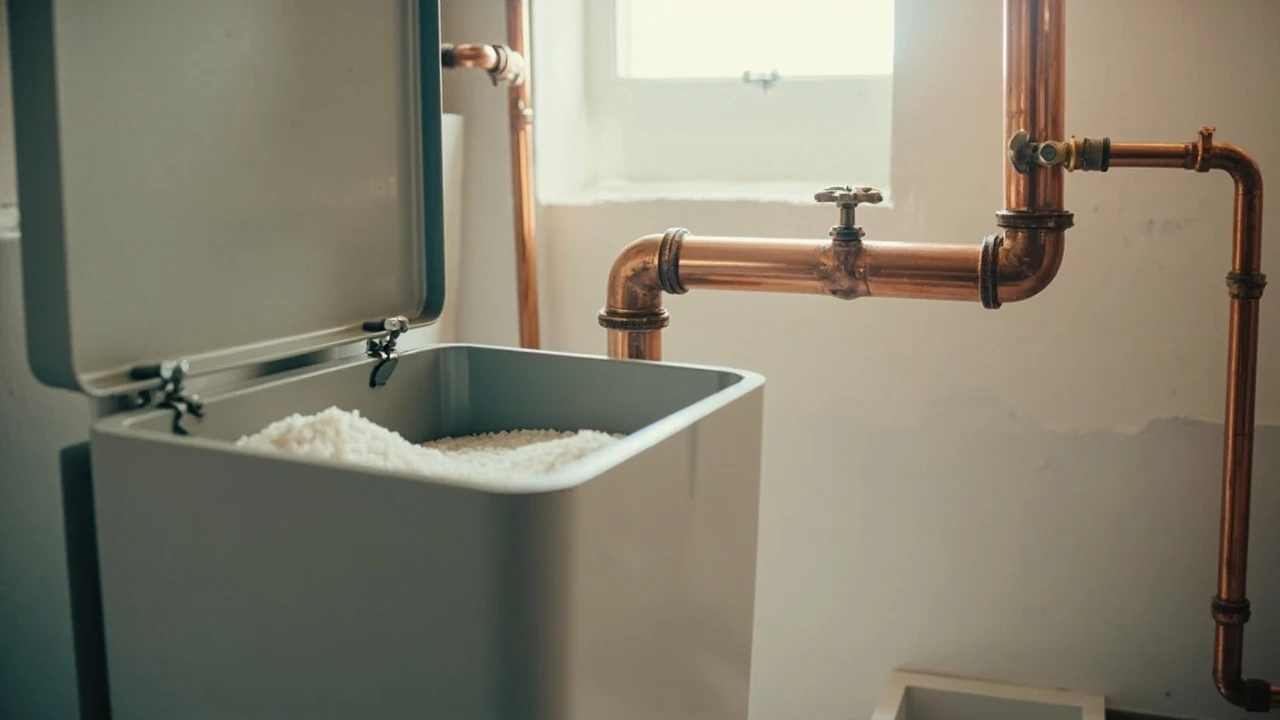
Water softener rental: how monthly programs actually work for U.S. homes
A homeowner in Phoenix opens a faucet and watches the soap refuse to lather. White crust forms around the showerhead inside a month. The same pattern repeats in Minneapolis, Tampa, and San Antonio, wherever groundwater carries calcium and magnesium. A whole-house ion-exchange softener solves the problem, but the unit often costs more than a used refrigerator, and a bad installation can void a water heater warranty. That is the gap a water softener rental program is designed to fill: a working softener in the basement or garage, a salt delivery schedule, and a phone number to call if it stops working, all for a flat monthly fee.
This guide walks through how those programs work in practice, what they typically include, what they cost, and what to look at before signing anything. It is written for U.S. homeowners, property managers, and small landlords who want soft water without committing to a purchase.
Why homeowners choose a rental softener instead of buying one
The case for renting usually comes down to one of three practical situations. A household is on a tight budget and does not want to spend several hundred to a few thousand dollars up front. A renter or short-term owner wants a softener only for the next two to four years. Or a household has been burned by a previous softener that failed early, and would rather pay a vendor to own the risk.
Buying still has real advantages. A purchased unit can be sized exactly to a home’s hardness level and water use, and the long-term cost is usually lower. Rental programs smooth out the cash flow and bundle service, but they also build a markup into every month for the rest of the time the softener is in the home. The decision comes down to how long you expect to stay, how comfortable you are sizing equipment yourself, and whether you would actually call a technician if something went wrong.
It also helps to know that a standard ion-exchange softener is a fairly simple device. According to the explanation of the ion-exchange method in the Wikipedia article on water softening, hard water passes through a resin bed where calcium and magnesium ions are swapped for sodium or potassium ions, and the resin is then recharged with a brine solution. The mechanics are well understood, which is why service contracts work: the technology is predictable, and most failures are mechanical rather than chemical.
What a typical water softener rental includes
Rental offers vary widely by region and brand, but most contracts bundle the same core items. Reading the fine print matters more than comparing the headline monthly price, because two offers at the same dollar amount can have very different service levels.
Equipment and installation
The rental company supplies the softener itself, often a mid-range ion-exchange unit in the 24,000 to 48,000 grain capacity range. Installation usually includes:
- Plumbing tie-in to the main water line, often at the point where water enters the home.
- A small drain line routed to a floor drain, utility sink, or standpipe for the regeneration cycle.
- A brine tank and initial fill of salt or potassium chloride pellets.
- Initial programming of regeneration cycles based on the home’s hardness level and number of occupants.
Some programs include a bypass valve so the softener can be isolated if the home is being sold or the unit needs service. Ask whether the installation is done by company employees or by a subcontractor, because warranty terms and scheduling windows can differ.
Service and salt
Most contracts cover repairs due to normal wear: valve failures, control board problems, resin replacement inside the service life, and brine tank issues. Salt delivery is sometimes included, sometimes billed separately, and sometimes optional. A common structure is:
| Service element | Often included in base rental | Often billed separately |
|---|---|---|
| Equipment repair or replacement | Yes, for the life of the contract | Damage from freezing, neglect, or unauthorized work |
| Salt or potassium pellets | Sometimes, automatic delivery | Often a separate line item, billed per 40 lb bag |
| Annual maintenance visit | Some programs include one checkup per year | Others charge a per-visit fee |
| Resin replacement (typically every 8-15 years) | Rare, but some premium contracts include it | Usually a separate charge, often several hundred dollars |
| Removal at end of contract | Yes, professional removal | Homeowner pays a removal fee in some contracts |
A few municipal water utilities and home warranty companies offer their own versions of water softener rental programs. These often look cheaper at first, but the contract terms are written very differently from a private vendor’s. Utility programs, for example, may be tied to a specific property and end automatically when service is transferred, while private contracts often continue billing until a written cancellation is received.
Monitoring and smart features
Newer rental softeners often include Wi-Fi modules that report salt levels, water usage, and last regeneration to a phone app. The data is useful, but it is also a reminder that the vendor knows how much water you use. Read the privacy and data terms before connecting the unit.
How monthly pricing is usually structured
Headline rental prices in many U.S. metro areas sit in the $25 to $60 per month range for a basic unit, with premium models and bundled salt pushing the total above $80. A few national programs advertise lower teaser rates that step up after an initial period, so the first invoice is not always a reliable predictor.
Pricing is driven by three things: the capacity of the unit, the length of the commitment, and what is bundled. A larger grain capacity means the softener can handle harder water and larger households without regenerating as often, which costs more. A 36 or 60 month contract usually carries a lower monthly fee than a month-to-month plan, but it also locks the household in.
| Program type | Typical monthly fee (USD) | Contract length | Best fit for |
|---|---|---|---|
| Basic month-to-month rental | $30 – $55 | None, cancel with notice | Short-term residents, cautious first-time users |
| Standard 24 to 36 month contract | $25 – $45 | 2 – 3 years | Owners planning to stay 3+ years |
| Premium 48 to 60 month contract with bundled salt | $55 – $90 | 4 – 5 years | Homeowners who never want to think about salt |
| Utility or home-warranty program | $20 – $40, sometimes added to a water bill | Often tied to service address | Households that prefer a single monthly bill |
For comparison, a good mid-range softener purchased outright often lands in the $600 to $1,400 range, with professional installation adding another $200 to $500. Over five years, a $40 per month rental costs $2,400, while a purchased system that lasts 10 to 15 years may cost $1,000 to $2,000 all in. The math tips toward buying once the softener would be in the home for more than four or five years, but the calculation only works if the purchased unit is properly sized and maintained.
What to measure before you sign a water softener rental contract
Two numbers drive almost every decision: how hard the water actually is, and how much water the household uses. Both are easy to get, and both are often glossed over in the sales pitch.
Water hardness
Hardness is measured in grains per gallon (gpg) in the U.S. Local water utility annual reports usually list a typical range, and private well owners can order a mail-in test or use a titration kit from a home improvement store. The general categories are:
- 0 – 3.5 gpg: soft, often does not need a softener
- 3.5 – 7 gpg: moderately hard, softener is helpful but not urgent
- 7 – 10.5 gpg: hard, softener pays for itself quickly in reduced soap and appliance wear
- 10.5+ gpg: very hard, larger capacity or twin-alternating unit is worth the upgrade
A household with very hard water will regenerate the softener more often, which means more salt and slightly higher running costs. Some rental contracts price by capacity tier, so confirming the actual hardness number avoids overpaying for an undersized unit or being upsold on an oversized one.
Daily water use
The average U.S. For additional context, household uses around 300 gallons per day, but actual use ranges from under 100 gallons for a single retired occupant to 500+ gallons for a large family with irrigation or a pool. A softener sized for 300 gallons per day will struggle in the second home. Ask the vendor how they calculated the recommended unit, and check the math against your own water bills.
How to read a water softener rental contract
Rental agreements for home equipment are usually written in plain language, but the small print controls who pays for what. Five clauses deserve close attention.
- Term and renewal. Look for the contract length, what happens at the end, and whether the contract auto-renews. Some programs roll over month-to-month after the initial term, which is convenient. Others restart another 36 or 60 month commitment unless the homeowner cancels in writing during a narrow window.
- Service response time. A reasonable commitment is a service call within two to five business days for non-emergencies, and 24 to 48 hours for a system that has stopped working entirely. Emergency response terms should be written down, not promised verbally.
- Salt policy. Confirm whether salt is included, how often it is delivered, and what happens if the homeowner runs out between deliveries. Automatic top-up is convenient; missing deliveries can lead to hard water returning without warning.
- Ownership at end of contract. Some programs let the homeowner buy the unit at fair market value after the term, others require professional removal at the homeowner’s cost, and a few allow the unit to stay in place free of charge. The right answer depends on how long the household plans to stay.
- Early termination fee. Most contracts include an early termination fee equal to a few months of service or a percentage of the remaining contract value. The fee should be clearly stated before signing.
If any of these points are missing or vague, ask for the contract in writing before agreeing to an installation appointment. A reputable vendor will not pressure a homeowner into signing on the spot.
Renting vs. buying: a side-by-side comparison
Both options produce the same soft water, but the trade-offs look different in practice. The table below summarizes the main points a typical U.S. household will weigh.
| Factor | Water softener rental | Buying and installing a softener |
|---|---|---|
| Upfront cost | Often $0 to $100 installation fee | Typically $800 – $1,800 for equipment plus $200 – $500 for installation |
| Ongoing cost | Monthly fee, often $25 – $60, plus salt if not bundled | Salt only, $5 – $15 per month for an average household |
| Repairs | Usually included | Homeowner pays, parts and labor |
| Equipment selection | Vendor chooses, sometimes one or two model options | Wide selection of brands, capacities, and features |
| Flexibility | Cancel or upgrade with notice, depending on contract | Full control, but the unit must be sold or removed if the household moves |
| Long-term cost over 10 years | Often $3,000 – $6,000 | Often $1,200 – $2,500, depending on salt use and repairs |
| Best fit | Short-term residents, hands-off homeowners, rental properties | Long-term owners, technically comfortable homeowners, those who want specific features |
A practical rule of thumb: if a household plans to be in the home for less than three years, renting usually wins on simplicity. If the timeline is five years or more, buying tends to be cheaper even after accounting for the occasional service call.
Common pitfalls in water softener rental programs
Most rental programs work as advertised, but a recurring set of issues catches homeowners off guard. None of these are deal-breakers, but each is easier to handle when anticipated.
Undersized equipment
A sales representative may quote a small unit to keep the monthly fee attractive, then program it to regenerate more often than necessary. The result is higher salt use and more wear on the valve. Push for a sizing calculation in writing.
Salt upselling
If salt is billed per bag, the price is often 30 to 50 percent higher than grocery store prices. Ask for the per-bag rate, and compare it to local home improvement and warehouse club prices before agreeing to automatic delivery.
Service delays
Some programs rely on regional subcontractors for service calls. During peak demand, a callback can take a week. Confirm the typical response time and whether a temporary bypass valve is provided so the household is not stuck with hard water or, worse, no water during a plumbing failure.
Auto-renewal clauses
Auto-renewal is not necessarily a problem, but it should be disclosed clearly. Calendar reminders for the cancellation window save a lot of money over a five-year contract.
Special situations: rentals, wells, and large households
Some households have constraints that change the calculation. Three come up often.
Rental properties. Landlords sometimes install rented softeners and pass the monthly fee through to tenants. The arrangement is legal in most states but should be spelled out in the lease, including who is responsible for keeping salt in the brine tank and who is responsible for damage. A sudden charge for salt that the tenant never agreed to buy is a frequent source of disputes.
Private wells. Well water hardness can swing seasonally, and well water often carries iron that a standard softener will not remove. A rental company that only tests hardness with a basic kit may not catch iron above 0.3 ppm, which can stain fixtures and foul the resin. Ask whether the rental program includes an iron pre-filter, and what the iron reading of the water was at the time of installation.
Large or high-use households. Homes with more than five full-time residents, or with features like a hot tub, large lawn, or pool, can push a 32,000 grain softener past its capacity. In that case a twin-alternating system, which alternates between two tanks so soft water is always available, is worth considering. Not every rental vendor offers twin units, and those that do charge a meaningful premium.
How to compare two rental offers fairly
Two quotes for a water softener rental can look very different even when they describe nearly the same program. A simple comparison worksheet keeps the decision honest.
- Confirm the same grain capacity in both quotes, not just the same monthly fee.
- Confirm whether installation, salt delivery, and annual maintenance are included or separate.
- Compare contract length, early termination fee, and renewal terms side by side.
- Ask both vendors for the total cost of ownership over five years, including projected salt use.
- Check independent reviews on the Better Business Bureau, Google, and any state contractor licensing board.
If one quote is dramatically lower than the others, the difference is usually in what is not included. A $19.95 per month teaser often excludes salt, installation, and service, and the real total can climb past $80 once those are added back in.
Environmental and water-quality notes
Ion-exchange softeners add a small amount of sodium to the treated water, which matters for households on sodium-restricted diets. Potassium chloride is a common alternative and works in most units without modification, but it is heavier and more expensive than sodium chloride. The regeneration cycle also produces a brine discharge that flows to the drain, which is why softeners should never be installed where the backwash line can cross-contaminate a well or a surface water source. For more on how regeneration cycles work, the EPA WaterSense program offers consumer guidance on water-using appliances and efficiency practices, though it does not specifically certify softeners. Some municipalities also require a backflow preventer and a floor drain or air gap on the discharge line; local plumbing code should be checked before installation.
When a water softener rental is the wrong answer
There are cases where renting simply does not fit. Homes with very low hardness under 3 gpg may not need a softener at all, and the monthly fee will buy very little benefit. Households with specific water quality concerns, such as high iron, sulfur, or manganese, often need treatment that goes beyond a rental softener’s scope. A whole-house water test, run by a state-certified laboratory, is a worthwhile first step before any commitment.
It is also worth being cautious about door-to-door sales pitches. A reputable water softener rental company will not refuse to leave a written quote overnight, will not pressure for an immediate decision, and will not demand the first three months of fees up front. If any of those behaviors show up, it is a signal to slow down and compare.
Practical next steps before signing
Before committing to a water softener rental, a short checklist keeps the decision grounded:
- Get a current hardness reading, in grains per gallon, from a water utility report or a certified test.
- Pull the last six months of water bills to estimate typical household use.
- Ask two or three vendors for written quotes that include the same line items: equipment, installation, salt, service, and total five-year cost.
- Read the contract, focusing on term, renewal, service response time, and ownership at the end.
- Confirm that the contract complies with state and local plumbing and consumer protection rules.
Soft water is one of the few home upgrades that touches nearly every daily routine, from laundry to skin care to appliance寿命. A rental program that is matched to the household, signed with clear terms, and serviced on a predictable schedule can be a reasonable way to get there without a large upfront cost. The key is to treat the contract as a real financial commitment, not a free trial, and to read it the same way one would read a cell phone or internet agreement.
Frequently asked questions
How much does a typical water softener rental cost per month?
Most U.S. programs fall in the $25 to $60 per month range for a standard unit. Premium models with bundled salt, twin tanks, or smart monitoring can push the total above $80 per month. The first invoice is not always a reliable predictor, since some programs advertise a low teaser rate that increases after an initial period.
What is usually included in a water softener rental contract?
Standard contracts include the softener itself, professional installation, repairs due to normal wear, and removal at the end of the term. Salt delivery, annual maintenance, and resin replacement are sometimes included, sometimes billed separately. The exact list belongs in the written contract, not in a verbal sales pitch.
Is renting a softener cheaper than buying one?
Over a five-year horizon, rental programs usually cost more than buying, because the monthly fee builds in a markup for service and convenience. Renting tends to be cheaper for households that stay in the home less than three years, while buying wins for longer stays, especially when salt is purchased in bulk.
How long do rental contracts usually last?
Most contracts run 24, 36, or 60 months, with a few month-to-month options at a higher monthly fee. Many contracts auto-renew at the end of the term, so it helps to set a calendar reminder for the cancellation window.
Who is responsible for salt in a rental program?
It depends on the contract. Some programs deliver salt automatically as part of the monthly fee, while others leave the homeowner to buy salt separately. Per-bag prices from a rental vendor are often higher than grocery or warehouse prices, so the contract language on salt is worth checking carefully.
Can renters install a water softener rental in an apartment?
Usually not, because installation requires tying into the main water line and routing a drain. Some vendors offer point-of-use or portable softening options for renters, but these are different from a whole-house rental. Apartment dwellers who want soft water often use a shower filter or a small under-sink unit instead.
Do water softener rental programs add sodium to drinking water?
Yes, ion-exchange softeners replace calcium and magnesium with sodium or potassium. The amount of added sodium is small, but households on strict sodium-restricted diets sometimes switch to potassium chloride, which most softeners accept without modification.
What happens at the end of a water softener rental contract?
Three outcomes are common: the vendor removes the unit at no cost, the homeowner buys the unit at a fair market price and owns it outright, or the contract rolls into a month-to-month plan. The end-of-term option should be spelled out in writing before the first installation, not after the last month of service.
Are water softener rental programs regulated?
Rental programs are generally governed by state consumer protection laws and standard contract rules, rather than a specific federal softener-rental law. NSF/ANSI Standard 44 covers the performance of ion-exchange softeners themselves, which is a useful reference when comparing equipment specifications. Local plumbing codes also apply to the installation.
Can I cancel a water softener rental early?
Most contracts allow cancellation, but charge an early termination fee equal to a few months of service or a percentage of the remaining contract value. Some programs waive the fee if the homeowner is moving and provides proof of the new address. The exact terms should be reviewed before signing.

Leave a Reply