

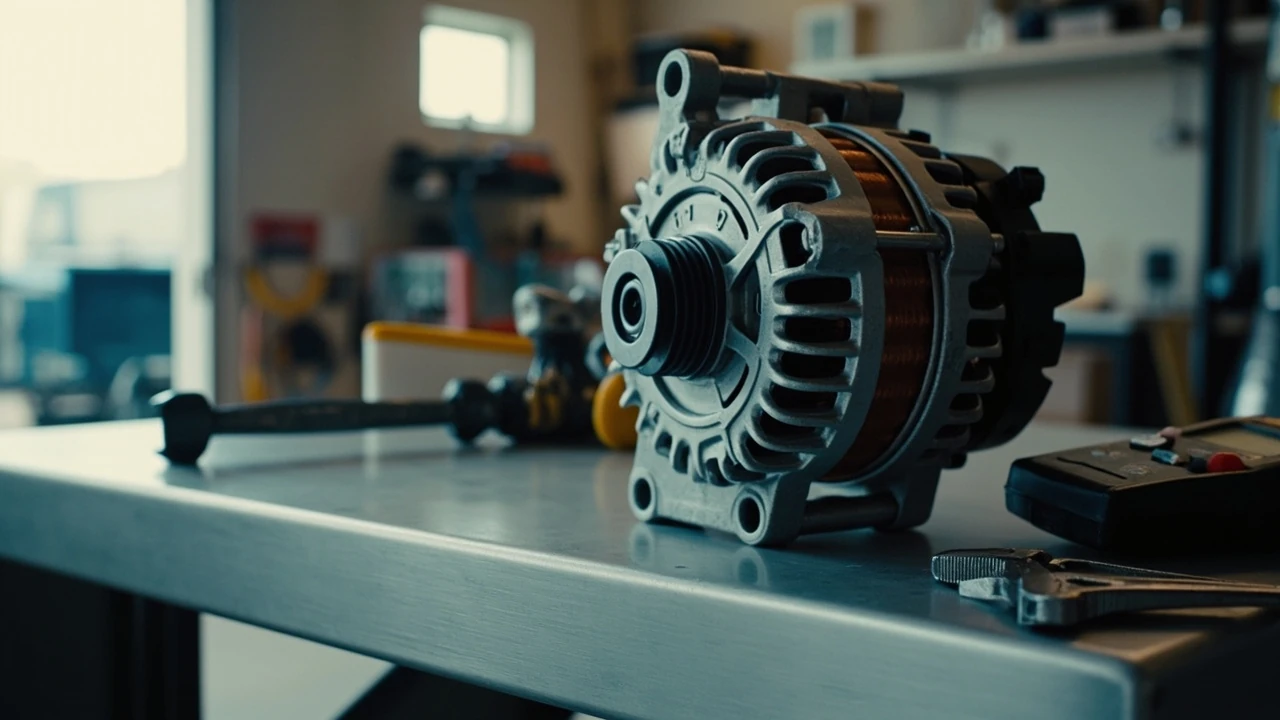
What does an alternator do in a car?
The moment a driver turns the key and the dashboard lights flicker to life, a small, heavy component bolted to the engine is already doing most of the work. The battery provides the initial jolt to crank the engine, but it cannot keep the electrical system running on its own for long. The alternator is the part that takes over from there, turning the engine’s rotation into the steady stream of electricity that powers headlights, infotainment screens, sensors, and the battery itself. Understanding what an alternator actually does, and what happens when it begins to fail, helps drivers avoid the kind of roadside surprise that usually shows up on the coldest morning of the year.
Although the alternator sits quietly next to the engine and rarely gets attention until something goes wrong, it is one of the hardest-working components under the hood. Every minute the engine runs, the alternator is converting mechanical motion into electrical current, regulating voltage, and keeping the battery topped up. The rest of this guide walks through how it works, what can go wrong with it, how it differs from a battery and a starter, and what a driver should realistically check before replacing one.
What an alternator actually does
At its core, an alternator is a generator. Its job is to convert mechanical energy from a spinning crankshaft into electrical energy that the rest of the car can use. The engine drives the alternator through a serpentine belt, which spins a rotor inside a set of stationary copper windings called a stator. As the rotor turns, it creates a changing magnetic field, and that field induces an alternating current in the stator.
Cars, however, do not run on alternating current. They run on direct current, the same kind of electricity stored in a 12-volt battery. To bridge that gap, the alternator contains a set of diodes called a rectifier, which converts the alternating current into direct current. A voltage regulator, either mounted on the back of the alternator or built into the engine control module, keeps that output in a tight range so the battery can charge without being damaged.
Three jobs fall out of that simple description, and they are worth keeping separate:
- Recharging the battery. The battery loses charge every time it starts the engine and every time it powers accessories with the engine off. The alternator replaces that lost energy while the engine runs.
- Powering live accessories. Headlights, climate control fans, power windows, the radio, heated seats, navigation, and the many small control modules scattered through a modern vehicle all draw current directly from the alternator while the engine is running.
- Stabilizing system voltage. The voltage regulator keeps the system in a narrow band, typically around 13.5 to 14.8 volts on a 12-volt system. That stability matters for sensitive electronics and for battery longevity.
Without an alternator, a car with a fully charged battery might run for a short distance, but every electronic load would slowly drain the battery until the engine stalled and refused to restart. The alternator is what makes a modern car electrically self-sufficient while driving.
How an alternator works, step by step
The mechanical principle behind an alternator is similar to the principle behind a wind turbine or a hydroelectric generator, just scaled down for an engine bay. The following sequence happens continuously while the engine is running.
- The engine’s crankshaft turns the serpentine belt, which is routed around a pulley on the front of the alternator.
- The pulley spins the rotor, an electromagnet that receives a small amount of current through slip rings and brushes.
- As the rotor spins inside the stator, its magnetic field cuts across the stator’s copper windings, inducing an alternating current.
- The rectifier, a set of six diodes arranged in a bridge, converts the alternating current into direct current.
- The voltage regulator monitors the system voltage and adjusts the current feeding the rotor to keep the output stable.
- Direct current flows out through the main output terminal to the battery and to the rest of the vehicle’s electrical system.
That sequence is why an alternator is sometimes described as a small, belt-driven power plant. The chemistry inside the battery only handles short bursts, while the alternator handles the steady, ongoing demand of the vehicle.
Alternator vs. battery vs. starter: who does what
Because the battery, the starter, and the alternator all sit near each other and share wiring, drivers often mix up their roles. The table below lays out the practical difference.
| Component | Main job | Active when | Typical failure symptom |
|---|---|---|---|
| Battery | Stores electrical energy as chemical energy | Engine off, engine cranking | Slow crank, no crank, dim interior lights at rest |
| Starter | Uses battery power to spin the engine and start combustion | Only during the first second or two of starting | Single click, grinding, or no response when turning the key |
| Alternator | Generates electricity and recharges the battery while the engine runs | Continuously while the engine is on | Warning light, dimming lights at idle, repeated dead battery |
The simple way to remember the split: the battery is a storage tank, the starter is the muscle that gets the engine going, and the alternator is the pump that refills the tank and runs everything else at the same time.
What can go wrong with an alternator
Alternators live in a harsh environment. They sit next to a hot engine, spin at thousands of revolutions per minute, and deal with vibration, moisture, and sudden temperature swings. Several failure modes are common, and each one tends to announce itself in a slightly different way.
Worn brushes or slip rings
Brushes are small carbon blocks that ride against the slip rings to feed current to the rotor. Over time they wear down, just like the brushes in an older power tool. When they get too short, the alternator stops producing reliable output. This is one of the most common failure points and is usually repairable without replacing the whole unit.
Failed voltage regulator
A regulator that sticks in the wrong position can either undercharge the battery or push voltage high enough to cook it. Overcharging often shows up as a battery that smells like sulfur, has a swollen case, or seems to lose water. Undercharging shows up as the opposite: a battery that never quite gets full even on long drives.
Bad diodes in the rectifier
When one or more diodes fail, the alternator can still charge, but it may also leak alternating current back into the electrical system. A common symptom is a faint electrical whine through the radio speakers that changes with engine speed.
Bearing or pulley failure
The For additional context, front bearing and the overrunning alternator pulley see constant load. A failing bearing usually announces itself as a grinding or whining noise that rises and falls with engine speed. A seized pulley can cause the belt to slip, squeal, or, in bad cases, come off entirely.
Damaged wiring or corroded connections
Sometimes the alternator itself is fine, but the main output cable or the ground connection has corrosion or a loose crimp. Because the alternator relies on solid electrical paths, even a small voltage drop at the connector can cause undercharging and strange warning-light behavior.
Signs that an alternator might be failing
Drivers do not need a diagnostic scanner to catch most alternator problems. The component usually leaves clues that get louder over time. The list below covers the symptoms that show up most often, along with the most likely underlying cause for each one.
- Battery warning light on the dashboard. Often shaped like a battery, this is the most direct indicator. It can mean either a charging problem or a battery problem, so further testing is still required.
- Dim or flickering headlights, especially at idle. When the engine is at low rpm, a weak alternator cannot always keep up with the load. Headlights may brighten as the engine revs, which is a classic sign.
- Frequent dead-battery mornings. If a healthy battery keeps going flat, the alternator is one of the first suspects, because something is draining it or the battery is not being refilled.
- Strange smells. A burning rubber or hot-wire smell can point to a slipping belt or an overworked alternator.
- Whining or grinding noises. A bad bearing or a failing pulley usually produces a sound that rises with engine speed.
- Electrical accessories behaving oddly. Windows move slowly, the infotainment system resets, or the interior lights pulse. These are signs that system voltage is unstable.
- Engine stalling while driving. Modern engines rely on electrical power for spark and fuel injection. If the alternator output collapses, the engine can cut out and refuse to restart.
How a technician actually tests an alternator
A guess is not a diagnosis, and a weak battery and a weak alternator can mimic each other. A proper test at a shop or with a home multimeter usually follows the same order of operations.
- Check the battery’s resting voltage with the engine off. A healthy 12-volt battery should read roughly 12.4 to 12.7 volts after sitting for a few hours.
- Start the engine and measure the voltage at the battery terminals. A healthy charging system typically reads 13.8 to 14.8 volts at idle.
- Turn on major electrical loads, such as headlights, the rear defroster, the blower fan on high, and the heated seats. Voltage should stay within roughly 13.5 to 14.8 volts. A reading that drops well below 13 volts under load points to a weak alternator.
- Rev the engine briefly and watch whether the voltage climbs back toward the mid-14s. If it does not, the regulator or the rotor may be tired.
- Listen for unusual bearing noise and inspect the belt for glazing, cracks, or contamination.
- Use an amp clamp or a bench tester to check the alternator’s output current against its rated output, especially on higher-demand vehicles.
A driver without tools can still do a useful sanity check. If the headlights brighten noticeably when the engine is revved and dim at idle, the alternator is on its way out. If the battery warning light stays on after the engine is running, the charging system is not working correctly and the car should not be driven far from a repair shop.
Alternator life span and what affects it
Most modern alternators are designed to last the life of the vehicle, but real-world conditions vary. Heat, vibration, water intrusion, and electrical overload all shorten service life. The following factors tend to push an alternator toward the exit early.
- Heat soak. An engine bay that runs hot, or a poor mounting location, cooks the windings and the diodes faster than a cooler setup would.
- Heavy electrical loads. Vehicles with aftermarket audio systems, light bars, plow motors, or work accessories pull more current than the original alternator was sized for.
- Short-trip driving. The alternator needs a reasonable amount of running time to refill the battery. Constant short trips, with the engine restarting cold, slowly starve the battery and stress the charging system.
- Contamination. Oil leaks onto the alternator, road salt, and pooled water all attack windings and connectors.
- Belt and pulley issues. A misaligned belt, a sticky tensioner, or a failing idler pulley can shake the alternator apart over time.
Most alternators in light-duty vehicles last roughly 100,000 to 150,000 miles, with a typical service life of 7 to 10 years under normal conditions. That said, a fleet vehicle, a work truck, or a car with a high-load audio system may see an alternator fail well before that.
How to choose a replacement alternator
Replacement alternators come in three general flavors, and the right pick depends on the vehicle, the budget, and how long the owner plans to keep the car.
| Option | Typical cost range | Pros | Cons |
|---|---|---|---|
| Remanufactured | Lowest | Lower cost, widely available, OEM-spec internals | Quality varies by rebuilder, often a shorter warranty |
| New aftermarket | Moderate | Brand-new components, often a stronger warranty than remanufactured | May not match OEM quality on every brand, fitment must be checked |
| OEM or dealer-supplied | Highest | Exact match for the vehicle, longest typical life | Highest cost, sometimes requires a dealer order |
When picking a replacement, the practical checklist below covers the points that matter most.
- Match the rated output in amps to the original specification. Upgrading is fine if the vehicle has added electrical accessories, but the wiring and the belt must be able to handle the extra load.
- Confirm the pulley count and the clocking of the connectors so the new unit bolts in without modifications.
- Look at the warranty terms. A 2- to 3-year warranty is reasonable for a remanufactured unit, while a lifetime warranty is common on premium aftermarket brands.
- Replace the serpentine belt and inspect the tensioner at the same time, especially if the original belt is more than a few years old.
- Have the battery load-tested before installing the new alternator, so a marginal battery does not damage the fresh unit.
Alternator care and habits that actually help
An alternator does not need a strict service schedule, but a handful of habits clearly extend its life and make failures less surprising. These are the same habits that experienced technicians tend to recommend across brands.
- Avoid leaving the car idling for long stretches with the headlights, defroster, and cabin fan on high. Idle rpm produces less alternator output than driving rpm, and a slow charge combined with a heavy load can overheat the diodes.
- Keep the battery terminals clean and tight. A weak connection forces the alternator to work harder to push current into the battery.
- Address oil leaks promptly. Oil that drips onto the alternator housing can wick into the windings and cause early failure.
- Limit the number of stacked electrical accessories on a vehicle that was not designed for them. If a high-output stereo or auxiliary lights are added, consider upgrading the alternator to handle the extra current.
- Have the charging system checked once a year on a vehicle with more than 80,000 miles, especially before winter, when a weak charging system reveals itself quickly.
What an alternator does not do
Because the charging system is small and tightly integrated, a few myths about alternators keep showing up. A quick correction helps set expectations.
- An alternator does not start the car. The starter does that. The alternator only takes over once the engine is running.
- An alternator does not run on a full battery forever. The battery acts as a buffer, but the alternator is the active source of electricity while the engine is on.
- An alternator is not the same as a generator in older cars, even though both perform a similar function. The alternator produces alternating current and rectifies it, while a traditional generator produced direct current directly.
- An alternator does not charge instantly. It needs engine rpm and a few minutes of running to refill a deeply discharged battery, which is why many short trips can leave a battery undercharged.
Alternator issues that look like other problems
One reason alternator failures are so commonly misdiagnosed is that they mimic other issues. A weak alternator can look like a bad battery, a bad ground, a failing starter, or even a fuel system problem. A few comparisons help separate the usual suspects.
| Symptom | Most likely cause if the battery is healthy | Most likely cause if the battery is weak |
|---|---|---|
| Slow or no crank | Starter or cable issue | Battery, with a possible alternator drain |
| Battery dies overnight | Parasitic draw, such as a stuck relay or light | Battery can no longer hold a charge, possibly because the alternator never refilled it |
| Dim lights at idle, bright lights at driving speed | Alternator output drops under load | Battery masking the problem, but the alternator is the underlying issue |
| Battery warning light while driving | Alternator or regulator | Battery, but the warning light still requires a charging-system test |
The pattern that comes up again and again is that a failing alternator often looks like a battery problem at first. The battery is the visible part that goes flat, so it gets replaced, and the new battery goes flat too, because the real issue is the charging system. A simple voltage test with the engine running catches this in a couple of minutes.
Driving a car with a failing alternator
The honest answer is that it depends on how far the alternator has degraded. A car with a weak alternator that still produces some voltage can sometimes be driven to a shop, but the distance should be short. Once the system voltage drops below the level the engine control module needs, the engine can stall, and a stalled engine with a drained battery will not restart without external help.
If a driver has to move a car with a suspected alternator failure, the safest path is to turn off every non-essential electrical accessory, including the radio, the climate control fan, the heated seats, and the rear defroster, and head straight to a repair shop. Some drivers carry a small jump starter pack for exactly this kind of situation, since a second dead battery is almost guaranteed once the alternator stops producing enough current.
Frequently asked questions
How long can a car run without a working alternator?
It depends on the battery’s state of charge and how many electrical accessories are running. A healthy, fully charged battery might keep a basic car running for 20 to 30 minutes, but a modern vehicle with headlights, a blower fan, and an infotainment system can drain the battery in far less time. Once the voltage drops below roughly 11 volts, the engine control module will typically shut the engine down to protect itself.
Can a car battery be good while the alternator is bad?
Yes. A battery can be perfectly capable of holding a charge and still leave a driver stranded, because a failing alternator cannot refill it. This is one of the most common scenarios in cold-weather breakdown calls. The battery is the storage tank, the alternator is the pump, and a broken pump empties a perfectly good tank in a matter of days.
How can I tell if it is the battery or the alternator?
The fastest method is to measure the battery voltage with the engine off and then with the engine running. A healthy battery reads around 12.4 to 12.7 volts at rest. A healthy charging system reads roughly 13.8 to 14.8 volts with the engine running. If the engine-running voltage is much lower, the alternator is suspect. If the resting voltage is low but the running voltage is correct, the battery is the more likely problem.
Do alternators need regular maintenance?
Most modern alternators are sealed and do not require scheduled service, but they benefit from clean connections, a properly tensioned belt, and a battery that is in good condition. A short annual check of the charging voltage is a useful habit, especially on vehicles that see hard use or many short trips.
Can a bad alternator damage a car battery?
Yes. If the voltage regulator fails and the alternator pushes voltage too high, the battery will overcharge, which boils off electrolyte and permanently reduces capacity. A failing diode can also leak current back into the battery when the engine is off, slowly draining it and shortening its life.
Is it worth rebuilding an alternator instead of replacing it?
For most drivers, replacing the unit with a remanufactured or new alternator is faster and comes with a warranty. Rebuilding makes sense when the alternator is a high-output, rare, or expensive OEM unit and a specialist is available to do the work. In either case, the underlying cause of failure, such as a bad battery or a slipping belt, should be addressed at the same time.
Why does my alternator whine when I accelerate?
A whine that rises and falls with engine speed usually points to a worn bearing, a failing overrunning alternator pulley, or a slipping belt. A faint electrical whine through the audio system that follows engine speed often points to a failing diode in the rectifier, which leaks alternating current into the audio path.
Can I jump-start a car with a bad alternator?
Yes, a jump start will get the engine running, but the underlying problem remains. Once the battery is disconnected or runs down again, the car will stall. A jump start is a useful emergency move, not a fix, and the car should be taken to a shop as soon as possible.
Does the alternator charge the battery while idling?
Yes, but more slowly than while driving. At idle, the alternator is still turning, but it produces less current and may not keep up with a heavy electrical load. Short idling periods are fine, but extended idling with many accessories on can actually drain the battery faster than the alternator can refill it.
What is the difference between an alternator and a generator?
Both convert mechanical energy into electrical energy, but an alternator produces alternating current and uses a rectifier to convert it to direct current, while an older-style generator produced direct current directly. Alternators are lighter, more efficient at low engine speeds, and better suited to the electrical demands of modern vehicles, which is why generators are rarely used in cars anymore.
Putting it all together
The alternator is one of those parts that only becomes interesting when it stops working. Once a driver understands that its job is to generate electricity, refill the battery, and keep system voltage steady, the warning signs start to make sense. Dimming headlights at idle, a battery that keeps going flat, and a glowing battery warning light are all the same general message: the charging system is not doing its job, and a few minutes of testing will usually point to the alternator, the battery, or a wiring problem in between. Catching the issue early is the difference between a quick repair and a tow truck on a cold morning.

Leave a Reply